O-1 Visa Lawyer
O-1 Petitions for Scientists, Founders, Artists and Athletes
Book a free consultation with attorney Zachary Gold to learn which O-1 track fits your record and who can file the petition for you.
- 5.0 102 Google reviews, Ewing office
 AILA memberAmerican Immigration Lawyers Association
- Since 1995Family firm founded by Marta Cruz Gold
- ¡Hablamos español!We work in English and Spanish
How can we help?
Pick a time below for a free 20-minute consultation with attorney Zachary Gold.
What an O-1 visa lawyer does
The O-1 is a temporary work visa for people whose achievements set them apart in their field: researchers, engineers, founders, executives, athletes, artists, musicians, and people who work in film and television. An O-1 visa lawyer's job is to match that record to the legal standard. Attorney Zachary Gold chooses the O-1 track with you, sets up who will file the petition, requests the advisory opinion, and prepares the evidence and the petition to USCIS.
Most of that work happens before anything is filed. Since August 5, 2026, USCIS can deny a petition without first asking for missing evidence (USCIS policy alert), and an O petition filed without premium processing can wait more than a year for a decision. A denial for a gap in the evidence then means an appeal or a new filing, with a new fee and a new wait.
O-1A, O-1B arts, or O-1B film and television
USCIS decides every O-1 under one of three standards, and the first question in any case is which one applies (USCIS).
- O-1A, for the sciences, education, business and athletics. You must be one of the small percentage who have risen to the very top of the field, with sustained national or international acclaim.
- O-1B, for the arts. The standard is distinction: achievement and recognition well above the ordinary, so that you are prominent in your field. The arts include any creative field, culinary arts among them, and the people a production depends on besides the performers, such as directors, designers, choreographers and conductors.
- O-1B, for motion pictures and television. The standard is extraordinary achievement, meaning recognition as outstanding or notable in the industry. USCIS generally counts streaming films, web series and commercials as film and television work, but not self-produced vlogs or social media content (USCIS Policy Manual).
Each track has its own list of evidence. O-1A needs a major internationally recognized award or at least three of eight types of evidence; both O-1B tracks need a nomination for or a win of a significant award, or at least three of six (8 CFR 214.2(o)(3)). Our O-1 visa requirements guide goes through every criterion and the evidence that usually supports it.
USCIS first counts the criteria and then weighs the whole record, so three criteria open the review without deciding it. Where a criterion does not fit your occupation, O-1A and O-1B arts petitions may offer comparable evidence instead, such as valuable startup equity in place of a high salary for a founder; film and television petitions may not.
Who can file an O-1 petition for you
The O-1 has no self-petition, although a company you own can file for you. The petition comes from a U.S. employer, a U.S. agent, or a foreign employer acting through a U.S. agent (8 CFR 214.2(o)(2)), and that choice decides what else the petition must contain.
- A U.S. employer. The company, university, lab or team that hires you files, and the petition covers the work for that employer.
- A company you own. USCIS guidance since January 2025 says a separate company owned by the beneficiary, such as a corporation or an LLC, may file, and USCIS may ask for ownership and control records to confirm a real employer with real work (USCIS Policy Manual).
- A U.S. agent. For artists, athletes and others who work for several employers or book short engagements through an agent. An agent filing for several employers needs an itinerary with the dates of each engagement and the names and addresses of the employers and venues, the contracts, and written authority from those employers. Without that authority, the approval covers only the agent's own engagements.
- Several employers at the same time. Each employer files its own petition, unless one established agent files for all of them.
Every petition also carries your contract or, without a written one, a summary of the oral agreement showing the terms offered and accepted; emails between the parties can show the agreement (USCIS). The work must be planned for the whole period requested. A job can count as the activity, while open-ended freelancing with no set engagements cannot be approved.
The advisory opinion
USCIS requires a written advisory opinion, called a consultation, with almost every O-1 petition (8 CFR 214.2(o)(5)).
- O-1A and O-1B arts. One letter, from a U.S. peer group in your field, which may be a union, or from a person with expertise in the field. A favorable letter describes your ability and achievements, the duties, and whether the work calls for someone of your ability.
- O-1B film and television. Two letters: one from the union for your occupation and one from a management organization in the industry.
A petition can go without one in a few situations. If the petitioner shows that no appropriate peer group, union included, exists for your field, USCIS decides on the evidence in the record. An O-1B artist coming back for similar work within two years of an earlier consultation can ask USCIS to waive a new one. And in arts, entertainment or athletics cases that need fast handling, USCIS can ask the union or management organization itself, and decides without the opinion if no answer comes within 24 hours.
USCIS is not bound by the opinion: an unfavorable letter must give specific facts and does not by itself lead to a denial. USCIS keeps a list, not a complete one, of unions, management organizations and peer groups that have agreed to write O consultations, last updated in September 2026 (USCIS address index), and asks that a letter issued with a watermark be filed in that version, since a plain copy can raise doubts about whether it is authentic (USCIS).
How we build an O-1 petition
The first meeting is a reading of your record: the CV, awards, press coverage, publications or credits, pay history, and the work planned in the United States. Zachary tells you then which track and which criteria that record supports, and where it is thin.
We tie each exhibit to the criterion it proves, and we ask the people who know your work for letters that describe your recognition and ability in factual terms and state the writer's own expertise and how they know your work, which is what the regulation asks of such letters (8 CFR 214.2(o)(2)(iii)). The consultation request goes out early, because a union or peer group works at its own pace. The cover letter then connects the record to the U.S. work, since you must be coming to continue work in your area of ability. USCIS reads that broadly: in its own examples, a professor moving to a private company and an engineer starting a technology company both count as continuing work in their area.
Working with Cruz Gold & Associates on an O-1
Your free consultation is with attorney Zachary Gold, who prepares the petition from our Ewing office, and our team works with you, your employer and your family in English and Spanish.
- A straight answer on readiness. If your record does not yet meet the standard, you hear that at the consultation, together with what would change it.
- Founders and agents too. We set up petitions through your own company or a U.S. agent, with the contracts and itinerary those petitions need.
From clients of our Ewing office
These two clients worked with Zachary on other kinds of immigration cases, and their words are copied from Google unchanged.
★★★★★“If something is not necessary or he feels he cannot help with it, he will be upfront and honest with you.”
Marly Lisa White, Google review, 2026
★★★★★“He’s attentive, responsive, and has an incredible attention to detail.”
Lissette, Google review, 2025
O-1 cases we handle
- O-1A petitions for researchers, engineers, executives and athletes
- O-1A petitions filed by a founder's own U.S. company
- O-1B petitions for artists, musicians, designers and chefs
- O-1B petitions for film, television and streaming work
- Agent petitions covering several employers or engagements
- Advisory opinion requests to unions, peer groups and management organizations
- Extensions, new engagements and amended petitions
- Change of status to O-1 from F-1, H-1B or another status
- O-2 petitions for the essential crew of an O-1 artist or athlete
- O-3 status for spouses and children
- Responses to requests for evidence and notices of intent to deny
- Preparation for visa interviews at U.S. consulates abroad
- The green card after the O-1, through EB-1A extraordinary ability or the EB-2 National Interest Waiver
How much does an O-1 visa cost?
An O petition is filed on paper and carries none of the H-1B and L surcharges, the fraud prevention, training and 9-11 fees, so the required USCIS filing fees come to two items: $1,655 in total for an employer with more than 25 full-time equivalent U.S. employees, before optional premium processing (USCIS fee schedule, Form G-1055; 8 CFR 106.2).
- Form I-129, $1,055. $530 for employers with 25 or fewer full-time equivalent U.S. employees, counting affiliates and subsidiaries, and for nonprofit schools and colleges, 501(c)(3) organizations and governmental research organizations. The fee schedule's lower online price does not apply, since USCIS takes Form I-129 online only for the H-1B.
- Asylum Program Fee, $600. Charged with every Form I-129: $300 for small employers, nothing for those nonprofits.
- Premium processing, $2,965. Optional; USCIS must act within 15 business days or refund this fee. It rose from $2,805 on March 1, 2026, and the beneficiary cannot be the one who files the request (8 CFR 106.4).
- O-3 family members, $470. For each Form I-539 filed on paper, or $420 online, when a spouse or child changes or extends status inside the United States.
- State Department visa fee, $205. Paid when you apply for each O visa; some nationalities also pay a reciprocity fee.
A 2025 federal law created a visa integrity fee of at least $250 for nonimmigrant visas (Public Law 119-21), and as of October 22, 2026 the State Department's list of visa fees does not include it.
How long does an O-1 visa take?
Regular processing is slow for O petitions: 80% were decided within 14.5 months, in USCIS figures updated October 19, 2026 (USCIS processing times). With premium processing, USCIS must act within 15 business days, with an approval, a denial, a request for evidence or a notice of intent to deny, or refund the premium fee; after a request or a notice, a new 15 business days start when USCIS receives the answer.
The petition can go in no earlier than one year before the work starts (8 CFR 214.2(o)(2)(i)), and USCIS advises filing at least 45 days before the start date (USCIS). Plan for the advisory opinion before that, and for the visa appointment abroad after approval. If you are changing status inside the United States, O-1 work can start only once USCIS approves the petition.
Since October 7, 2026, paper O petitions from an employer or agent whose main U.S. office is in New Jersey go to the USCIS lockbox in Chicago, to a separate box when premium processing is requested with the petition; a premium request added later to a pending New Jersey petition goes to the Phoenix lockbox. USCIS accepts petitions mailed to the old addresses if postmarked by November 9, 2026 (USCIS filing addresses). Petitioners based in Pennsylvania use the same Chicago boxes, and those in Texas file in Dallas.
How long an O-1 lasts, and changing jobs
USCIS approves an O-1 for the time the event or activity needs, up to three years. You may enter up to 10 days before the approval period starts and stay 10 days after it ends, working only during the approved dates (8 CFR 214.2(o)(10)). To continue the same activity, extensions come in steps of up to one year; for a new event or activity, USCIS may approve up to three years, and there is no limit on the number of extensions (USCIS Policy Manual). When the employer files the extension on time, you can keep working for it for up to 240 days past the date on your I-94 while USCIS decides.
An O-1 is tied to its petitioner. An H-1B worker can start with a new employer as soon as it files, and an O-1 holder cannot: the new employer files its own petition, and you start once USCIS approves it. Under an agent petition, new work is added through an amended petition, although for artists and entertainers the petitioner may add engagements that call for someone of O-1 caliber during the approval period without one. Traded professional athletes keep working for 30 days, and longer if the new team files within that time (8 CFR 214.2(o)(2)(iv)).
Losing the job does not have to end your status at once. DHS may allow you and your family up to 60 consecutive days, ending sooner if the approval does, once per approval period, and can shorten or refuse that time in a given case; you cannot work in it unless otherwise authorized (8 CFR 214.1(l)). An employer that ends the job early for any reason other than your resignation must pay your reasonable trip home, and so must the agent if one filed. DHS has proposed two changes that reach O-1 holders: removing the 60-day grace period (September 2026 proposal, comments due November 10), and ending USCIS deference to its earlier approval when it decides an extension on the same facts, which would reach O-1 extensions (October 2026 proposal, comments due November 13). Neither is final, so today's rules still apply.
Getting the O-1 visa at a U.S. consulate
After approval, a person abroad applies for the O visa at a U.S. embassy or consulate, while a visa-exempt person shows the approval notice at the port of entry, and someone whose earlier O visa has expired can use the approval notice to apply for a new one while the petition is valid. Since October 1, 2025, nearly every visa applicant goes to an in-person interview, and O applicants are not in any waiver category (State Department). Book the interview in your country of nationality or residence: applying elsewhere can make it harder to qualify, the wait is longer, and the fee is not refunded (State Department).
Since January 1, 2026, nationals of 19 countries, among them Afghanistan, Burma, Haiti, Iran, Somalia and Syria, and holders of Palestinian Authority travel documents cannot get O visas unless they were in the United States or already held a valid visa on that date, or an exception applies. One exception covers athletes, coaches and support staff traveling for the World Cup, the Olympics or another major sporting event the Secretary of State designates (Proclamation 10998). Nationals of 20 more countries on the list can still get O visas, some of them with shorter validity.
Laws, fees and processing times on this page were checked on October 22, 2026 on uscis.gov and the USCIS Policy Manual, State Department sites, the Federal Register and eCFR, and federal statutes.
How an O-1 case moves
- Free consultation. Book on the calendar or call. If you can, send your CV and a list of awards, press, publications or credits before the call.
- Preparing the petition. The consultation request goes out first; then the exhibits, the letters, and the contract or itinerary.
- Filing. No earlier than a year before the work starts and, where the schedule allows, at least 45 days ahead, with premium processing if you choose it.
- After approval. In the United States, the change of status requested in the petition takes effect and O-1 work can start; abroad, you go to the consulate interview unless you are visa-exempt. O-3 papers for your family come at the same stage.
- Later. Extensions of up to a year at a time for the same work, up to three years for a new event, a new petition for a new employer, and, if you plan to stay, a green card case through EB-1A or the National Interest Waiver.
Our fee for an O-1 petition
We usually charge one flat fee for an O-1 petition, set by the track and by who files: an employer, your own company, or an agent with several engagements. You hear the amount before any work begins, and USCIS and State Department fees are separate. Credit cards are accepted, and our page on flat and hourly legal fees explains how the two differ.
Talk to attorney Zachary Gold about your case. The first consultation is free, and you hear the fee before any work begins.
Who will work on your O-1 case
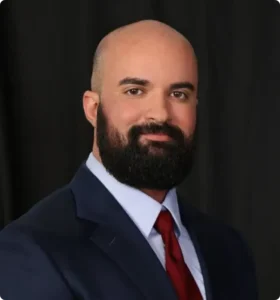
Zachary Gold, Esq. owns Cruz Gold & Associates and is the attorney you speak with at your first consultation. He has more than seven years of legal experience and started his career as a paralegal.
He is a Rutgers University alumnus, earned his law degree at Drexel University, and is a member of the American Immigration Lawyers Association. His mother, Marta Cruz Gold, founded the firm in 1995, and his interest in immigration law comes from his own parents' move to the United States. Read more about Zachary and the firm.
Questions about the O-1 visa
How much does an O-1 visa lawyer cost?
Usually one flat fee, quoted before any work begins, plus USCIS fees of $530 to $1,655 depending on who files, and $2,965 if you choose premium processing.
Do I need a lawyer for an O-1 visa?
No law requires one. Beyond the evidence itself, an O-1 can go wrong on its structure: an agent petition without a complete itinerary, or without the employers' written authority, which limits the approval to the agent's own engagements; a consultation from a group that does not cover your occupation; or film and television work filed under the arts standard.
Can I get an O-1 visa without a job offer?
You need a petitioner, though it does not have to be a traditional employer. A U.S. agent can file for work with several employers or engagements, and a U.S. company you own can file for you. Either way, the petition must show planned work for the whole period, so open-ended freelancing with no set engagements does not qualify.
Can I work for more than one employer on an O-1?
Yes. Each employer can file its own petition for you, or one U.S. agent that is in business as an agent can file a single petition with an itinerary, the contracts and the employers' written authority. You may work only for the employers and engagements the approval covers, although for artists and entertainers the petitioner can add engagements of the same caliber while the approval runs.
Can an O-1 visa be transferred to a new employer?
There is no transfer in the H-1B sense. The new employer files a new petition, and you start working for it once USCIS approves it, which is why premium processing often matters in a job change. Under an agent petition, the new work is added through an amended petition. Traded professional athletes are the exception: they keep working for 30 days after the trade, and until USCIS decides if the new team files within that time.
Can an O-1 spouse work in the United States?
No. Your spouse and unmarried children under 21 come in O-3 status, which allows full-time or part-time study but not work (USCIS). A spouse who wants to work needs a separate status that allows it.
Related pages
Take the First Step Towards Peace of Mind
We’re here to help you navigate your legal journey with confidence and care. Pick a time below for a free 20-minute consultation with attorney Zachary Gold.

Reach Out for Trusted Support
CONTACT US
Phone: (609) 924-8500
Email: [email protected]
830 Bear Tavern Rd Ste 108, Ewing Township, NJ 08628, United States
© 2026 All Rights Reserved | Cruz Gold & Associates | Privacy Policy