Asylum Lawyer
Afraid to Return to Your Country? Start Your Asylum Case With a Free Consultation
Tell attorney Zachary Gold when you arrived and what happened, and find out whether you can still apply.
- 5.0 102 Google reviews, Ewing office
 AILA memberAmerican Immigration Lawyers Association
- Since 1995Family firm founded by Marta Cruz Gold
- ¡Hablamos español!We work in English and Spanish
How can we help?
Pick a time below for a free 20-minute consultation with attorney Zachary Gold.
How we help people seeking asylum
An asylum lawyer at Cruz Gold & Associates prepares your Form I-589, the written account behind it and the evidence that supports it, then gets you ready for the asylum interview or for immigration court. Attorney Zachary Gold checks your arrival date before anything else, because most applications have to be filed within one year of arriving in the United States.
What asylum protects you from
Asylum is protection for people who were persecuted in their home country, or who fear they would be, because of their race, religion, nationality, political opinion or membership in a particular social group. A person granted asylum can stay and work in the United States, bring a spouse and children, and later apply for a green card.
You ask for asylum in one of two ways, depending on whether you are in removal proceedings. Affirmative asylum is the route for people who are not: you file with USCIS, and an asylum officer interviews you. Defensive asylum is the route for people already in immigration court, where you ask the judge for asylum as a defense against removal. When asylum is out of reach, for example because the one-year deadline has passed, two narrower forms of protection may still be available in court. They are withholding of removal and protection under the Convention Against Torture.
Why work with Cruz Gold & Associates on an asylum case
- Attorney Zachary Gold on your case. He owns the firm, takes the free consultation himself and handles the case through the decision.
- Your account in Spanish or English. Our roots are Cuban-American, so Spanish-speaking clients can tell us what happened in Spanish while we prepare the application in English.
- The same firm if USCIS refers the case to court. We also defend clients in removal proceedings, so a referred case stays with the lawyer who prepared it.
- A fee you know in advance. You hear our fee for your case at the consultation.
What clients say about working with us
Clients of our Ewing office wrote these reviews about other kinds of immigration cases.
★★★★★“They were kind, patient, responsive, and always took the time to answer our questions and ease our concerns.”
A Nafisa, Google review, 2026
★★★★★“One thing I really appreciated is that he will never pressure you into doing something just to take your money. If something is not necessary or he feels he cannot help with it, he will be upfront and honest with you.”
Marly Lisa White, Google review, 2026
How we build an asylum case
Our team prepares the documents, and Zachary Gold reviews every page and prepares you for the interview. He starts with the dates and papers you already have. When did you last arrive in the United States? Did you or a family member apply for asylum before? Do you have any arrest or conviction, and did you ever receive a Notice to Appear? Those answers decide whether the case goes to USCIS or to the immigration court, and whether the one-year deadline is a problem.
We then build the case around your own account. An asylum officer or judge may grant asylum on credible testimony alone, but can ask for evidence that supports it, so we gather what is reasonably available:
- your passport and every travel document, cover to cover, and your I-94 or other entry record
- marriage and birth certificates for the spouse and children you include
- anything that shows what happened to you, such as police or medical records, letters, photos, membership cards or threats you received
- reports on conditions in your home country
- certified English translations of every document in another language
The written statement in your I-589 and your testimony at the interview have to tell the same story, because the officer compares the two. We write the timeline with you first, with dates, places and names, and check every page of the application against it before anything is filed. Before filing we also check four things that can sink an asylum case: a filing date close to or past the one-year mark, dates that differ between the application and your documents, evidence that would arrive too late for the interview, and plans to travel abroad while the case is pending.
Asylum cases we handle
- Affirmative asylum applications filed with USCIS, and the interview at the Newark or Houston asylum office
- Asylum, withholding of removal and Convention Against Torture claims in immigration court, as part of deportation defense
- Including your spouse and unmarried children under 21 in your application
- Work permits while your asylum case is pending
- Petitions for a spouse or children abroad after asylum is granted
- The green card application one year after asylum is granted
- Late applications that may fit one of the exceptions to the one-year deadline
Who qualifies for asylum?
You may qualify if you are in the United States, whatever your immigration status, and you were persecuted or have a well-founded fear of persecution because of one of five grounds: race, religion, nationality, political opinion or membership in a particular social group (INA 101(a)(42), INA 208). One of those grounds has to be at least one central reason for the harm. A fear is well-founded when there is a reasonable possibility of persecution if you return (8 CFR 208.13).
The law bars asylum for anyone who took part in persecuting others, was convicted of a particularly serious crime (every aggravated felony counts), committed a serious nonpolitical crime abroad, is a danger to U.S. security, falls under the terrorism grounds, or was firmly resettled in another country before coming here. Asylum is also discretionary, which means an officer or judge may deny it even to an eligible person, a point our article on common misconceptions about immigration law also makes.
Withholding of removal and protection under the Convention Against Torture have no one-year deadline. They do require proof that persecution or torture is more likely than not, they do not cover your spouse or children, and they do not lead to a green card (8 CFR 208.16). Only an immigration judge can grant them.
What is the one-year deadline for asylum?
You must file within one year of your last arrival in the United States, and prove the date by clear and convincing evidence (8 CFR 208.4). A late application can still be accepted if your circumstances changed in a way that affects your claim, such as new danger in your home country, or if extraordinary circumstances caused the delay, such as a serious illness. Even then, you have to file within a reasonable time after those circumstances. Unaccompanied children are not subject to the one-year deadline at all.
How much does it cost to apply for asylum?
Since July 22, 2025, federal law charges these government fees (USCIS fee schedule, Form G-1055):
- Asylum application (Form I-589)$100, paid once by the main applicant when filing.
- Annual asylum fee$102 for each year the application stays pending at USCIS, rising to $105 for payments postmarked on or after October 16, 2026. In immigration court the annual fee is $105. USCIS sends a notice, and the fee is paid online within 30 days (USCIS Form I-589 page).
- First work permit while the case is pending (Form I-765)$560, rising to $570 on October 16, 2026. A renewal costs the regular $470 online or $520 on paper, plus a separate $275 renewal fee for asylum applicants that the 2025 law added.
None of these asylum fees can be waived. USCIS cannot approve an asylum application while an annual fee is unpaid. A federal court in Massachusetts has paused the harshest penalties for non-payment, such as rejecting the application, but USCIS still collects the fee (USCIS alert, July 2026).
Can you work while your asylum case is pending?
Yes, after a waiting period. You can apply for a work permit 150 days after a complete asylum application is filed, and USCIS cannot issue it before the application has been pending 180 days (8 CFR 208.7). Delays you cause, such as a missed biometrics appointment or a rescheduled interview, stop that clock. Asylum-based work permits are now valid for at most 18 months, and an expiring permit is no longer extended automatically while a renewal is pending, so renewals should be filed early (USCIS Policy Manual).
Where are asylum interviews held?
The Newark Asylum Office covers all of New Jersey, and Philadelphia with most of eastern and central Pennsylvania. It is at Gateway 3, 100 Mulberry Street, Suite 199, in Newark, by appointment only, and since April 20, 2026 it no longer accepts walk-ins (USCIS Newark Asylum Office). An applicant from Philadelphia therefore travels to Newark for the interview.
Applicants in Texas, our Houston clients among them, go to the Houston Asylum Office, 16855 Northchase Drive, by appointment only (USCIS Houston Asylum Office).
Your interview notice gives the exact place, since USCIS may also hold interviews at a branch office or a field office. Applicants who mail Form I-589 from New Jersey, Pennsylvania or Texas send it to the USCIS Dallas lockbox (USCIS Form I-589), and anyone already in immigration court files it with the court instead.
What can delay or deny an asylum case?
- The interview schedule. USCIS publishes no processing time for asylum. It schedules the newest applications first while working through older ones (USCIS interview scheduling), and DHS reported 1,434,145 pending affirmative cases at the end of fiscal year 2025 (Federal Register, July 2026).
- Referral without an interview. Since July 28, 2026, an asylum officer may send a case to immigration court on the record alone when the applicant appears barred, for example by the one-year deadline (USCIS announcement).
- Late evidence and rescheduling. Since August 21, 2026, all evidence must reach the asylum office 14 days before the interview, and USCIS reschedules an interview only for exceptional circumstances such as serious illness or a death in the family (USCIS asylum page).
- The interpreter. An interpreter you bring must be at least 18, fluent in both languages, and cannot be your lawyer or a witness. Without a qualified interpreter, the interview is rescheduled and the delay counts against you.
- Travel. Leaving the United States without advance parole while the application is pending is treated as abandoning it (8 CFR 208.8). Our guide to traveling abroad as a non-citizen covers the other risks.
- A frivolous application. Knowingly filing a fabricated claim, after the warning on the form, can bar you from every immigration benefit for life.
Asylum rules changed often in 2025 and 2026, and several are being decided in federal court. One example is a December 2025 USCIS hold on asylum decisions, which courts have since vacated and blocked (USCIS alert, June 2026). We check the current rules on the day we file your case.
Rules, fees and office details on this page were checked on uscis.gov, justice.gov/eoir and the federal regulations on October 3, 2026.
Steps in an asylum case
- Free consultation. Tell attorney Zachary Gold when you arrived, what happened to you and who in your family is with you, and bring any notice from USCIS or the immigration court.
- Preparing the application. We write your statement with you, collect evidence and translations, and complete Form I-589. When your one-year date is close, filing comes first and evidence can follow.
- Filing. USCIS sends a receipt, returns an incomplete application within 30 days, and schedules fingerprints for you and every family member included.
- Waiting. You can apply for a work permit at 150 days. Pay each annual asylum fee within 30 days of the notice.
- The interview. We send your evidence at least 14 days before, prepare you with practice questions, and can attend with you. Interviews generally last at least an hour.
- The decision. USCIS usually asks you to return about two weeks after the interview to pick up the decision. A grant comes with approval papers. If you have no other lawful status and asylum is not granted, the case goes to immigration court, where a judge hears it from the start.
- After a grant. You can work, petition within two years for a spouse or children abroad, and apply for a green card after one year in the United States.
Fees and your free consultation
The first consultation with attorney Zachary Gold is free, and you pick the time in the booking calendar on this page. At that consultation you hear how we will charge for your case, before any work begins. Cases in immigration court are billed by the hour, with a retainer to start. Government fees are separate, and we accept credit cards. Our page on what an immigration lawyer costs explains how we bill.
Talk to attorney Zachary Gold about your case. The first consultation is free, and you hear the fee before any work begins.
Your attorney: Zachary Gold
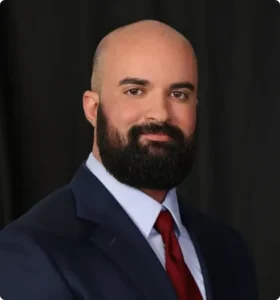
Zachary Gold, Esq. owns Cruz Gold & Associates and is the attorney you speak with at your first consultation. He has more than seven years of legal experience and started his career as a paralegal.
He is a Rutgers University alumnus, earned his law degree at Drexel University, and is a member of the American Immigration Lawyers Association. His mother, Marta Cruz Gold, founded the firm in 1995, and his interest in immigration law comes from his own parents' move to the United States. Read more about Zachary and the firm.
Frequently asked questions
How much does an asylum lawyer cost?
It depends on whether your case is with USCIS or in immigration court, and the free consultation is where you hear the fee for yours. Court cases are billed by the hour. The government fees are separate: $100 for the application, an annual asylum fee each year it is pending, and $560 for a first work permit.
How long does an asylum case take?
USCIS does not publish a processing time for asylum. It often schedules new applications first, while older ones can wait years, and DHS has described waits of more than seven years in the backlog. Our article on why immigration cases take so long explains the backlog. A case referred to immigration court then follows the court's own schedule.
What happens at the asylum interview?
An asylum officer asks about your identity, your journey and what happened to you, in a private, non-adversarial interview. Your lawyer can attend, make a statement and ask questions at the end. You bring your own interpreter if you need one, your spouse and children included in the case must come, and the interview generally takes at least an hour.
What happens if my asylum application is denied?
If you have no other lawful status, USCIS refers your case to immigration court, where a judge decides the claim from the start. If you have a valid visa or other status, USCIS first sends a notice of intent to deny, and you have 16 days to respond. An immigration judge's decision can be appealed to the Board of Immigration Appeals.
Can I bring my family if I get asylum?
Yes. A spouse and unmarried children under 21 who are in the United States can be included in your application. For family members abroad, or anyone left out, you file Form I-730 for each person within two years of the grant, and there is no filing fee.
Can I travel while my asylum case is pending?
Only with advance parole approved before you leave, and never to the country you fear. Leaving without it is treated as abandoning your application, and a trip back to your home country can be treated as abandoning the claim even with advance parole.
Related pages
Take the First Step Towards Peace of Mind
We’re here to help you navigate your legal journey with confidence and care. Pick a time below for a free 20-minute consultation with attorney Zachary Gold.

Reach Out for Trusted Support

CONTACT US
Phone: (609) 924-8500
Email: [email protected]
830 Bear Tavern Rd Ste 108, Ewing Township, NJ 08628, United States
© 2026 All Rights Reserved | Cruz Gold & Associates | Privacy Policy