Immigration Waiver Lawyer
A Past Overstay Does Not Have to Mean Ten Years Apart
Book a free consultation with attorney Zachary Gold, and bring every notice and record of when you entered and left the United States.
- 5.0 110 Google reviews, Ewing office
 AILA memberAmerican Immigration Lawyers Association
- Since 1995Family firm founded by Marta Cruz Gold
- ¡Hablamos español!We work in English and Spanish
How can we help?
Pick a time below for a free 20-minute consultation with attorney Zachary Gold.
How an immigration waiver lawyer helps
When an overstay, a past deportation, a false statement to an immigration officer or an old conviction stands between you and a green card, an immigration waiver lawyer can tell you whether the law forgives it and which form to use. At a free consultation, attorney Zachary Gold goes through your entries, exits and any court history, then tells you whether an I-601 waiver, an I-601A provisional waiver or permission to reapply on Form I-212 fits your case.
Most family waivers depend on one person: a spouse or parent who is a U.S. citizen or green card holder and would suffer extreme hardship if you were kept out. That is the case we build, with the evidence USCIS asks for, so that your marriage green card or family visa can go ahead.
Grounds of inadmissibility and the forms that waive them
The immigration law lists reasons that keep a person from getting a visa or a green card, such as staying in the United States without status, lying to get an immigration benefit, or certain crimes. Lawyers call them grounds of inadmissibility. Some have no waiver. For others, USCIS can forgive the problem if you ask on the right form and prove what the law requires. An approved waiver covers only the grounds and events you disclosed, so everything has to be in the application (8 CFR 212.7).
Three forms do most of this work for families:
- Form I-601. The general waiver. It covers the three- and ten-year bars for unlawful presence, fraud or misrepresentation, certain crimes, health grounds and a few others. It is filed after a consular officer finds you inadmissible, or with a green card application inside the United States (USCIS: Form I-601).
- Form I-601A. The provisional unlawful presence waiver. You file it while still in the United States, before you leave for the immigrant visa interview, so you know the answer before the trip. It covers unlawful presence and nothing else (USCIS: Form I-601A).
- Form I-212. Permission to reapply for admission. You need it after a removal or deportation, or if you left while under a removal order (USCIS: Form I-212).
Who qualifies for the I-601A provisional waiver?
You can file an I-601A if all of these are true (8 CFR 212.7(e)(3); Form I-601A instructions):
- you are in the United States and at least 17 years old
- you have an immigrant visa case with the State Department, such as an approved family petition, and the visa fee receipt already shows "PAID"
- the only reason you would be refused is unlawful presence
- your spouse or parent is a U.S. citizen or green card holder and would suffer extreme hardship if you were refused
That last person is your qualifying relative. It does not have to be the relative who filed the petition, and a son or daughter does not count for this waiver.
Staying unlawfully for more than 180 days but less than a year, and then leaving, brings a three-year bar. Staying a year or more brings a ten-year bar. The clock starts the day you leave, which is why people who must travel abroad for the visa interview ask for the waiver first. Time spent under age 18 does not count toward either bar (USCIS: unlawful presence and inadmissibility).
You cannot file an I-601A if you have a green card application pending, if you are in removal proceedings that are not administratively closed, if you have a final removal order and no approved I-212, if an old order was reinstated, or if you have an unexpired grant of voluntary departure (8 CFR 212.7(e)(4)).
What an immigration waiver attorney checks first
Zachary Gold reads every entry, exit, arrest and court record before recommending a form, because the I-601A covers unlawful presence only, and its approval is revoked if the consulate finds a different problem at the interview. He also confirms who counts as your qualifying relative before any evidence is collected, since hardship to the wrong family member does not meet the standard. Because we also prepare the family petition and the visa case, the hardship evidence and the consular file match. Our team works in English and Spanish.
Two clients, in their own words
Neither review is about a waiver case. Both are quoted from Google as written.
★★★★★“If something is not necessary or he feels he cannot help with it, he will be upfront and honest with you.”
Marly Lisa White, Google review, 2026
★★★★★“Zach walked us through the entire process, making sure we didn't miss a single form, deadline, or important detail.”
Greg Snow, Google review, 2026
What counts as extreme hardship?
The law does not define extreme hardship. USCIS reads it as more than the usual pain of separation or of moving abroad, and less than the "exceptional and extremely unusual hardship" that immigration judges require for cancellation of removal (USCIS Policy Manual). You prove it by a preponderance of the evidence, which means more likely than not.
USCIS looks at two possible futures: your spouse or parent stays in the United States without you, or moves abroad with you. You need to prove hardship in only one of them, and a credible sworn statement from your relative about which one would happen generally settles that question. Hardship to you counts only through its effect on your qualifying relative, and the same goes for hardship to your children in an unlawful presence case (USCIS Policy Manual).
On their own, family separation, lost income, weaker schools, poorer medical care and starting over in another country are treated as the common results of a refusal. Officers must weigh each factor and then all of them together, so those results combined with something more, such as a serious medical condition, can add up to extreme hardship. These circumstances often weigh heavily (USCIS Policy Manual):
- your relative was granted asylum, refugee or T status from the country you would return to
- a formal disability determination for your relative or someone your relative cares for
- your relative's active duty military service
- a State Department warning against travel to that country
- a major shift in who cares for the children
The waiver is also discretionary, so after finding extreme hardship USCIS still weighs the favorable parts of your record against any criminal or immigration problems before it decides (Form I-601A instructions).
Building the extreme hardship case
Zachary starts with the qualifying relative's life as it is today: health, work, money, who depends on whom, and ties to the community. Each claim in the application has a record behind it. USCIS lists the kinds of proof it expects, and a complete file usually has (Form I-601A instructions):
- medical records and letters from treating doctors or therapists
- tax returns, pay records, debts and a monthly budget
- birth and marriage certificates for every family tie the case relies on
- sworn statements from the qualifying relative and from people who know the family
- country condition reports for the place you would return to, including State Department travel warnings
- records of your family's ties to its community, such as membership in a church or local group
Before filing, we check for the mistakes that sink these packages. A letter about the sadness of separation, with no records behind it, describes the hardship USCIS treats as ordinary. An argument built around the children instead of the qualifying spouse or parent misses the person the law looks at. An I-601A sent in the same envelope as another application or petition, such as an I-130 or I-485, is rejected and returned (Form I-601A instructions), and a visa fee receipt that says "In Process" instead of "PAID" is not enough (USCIS: Form I-601A). USCIS can deny an I-601A without first asking for more evidence, so the package has to be complete the day it is filed.
Waiver cases we handle
- I-601A provisional waivers for spouses, sons and daughters of U.S. citizens and green card holders
- I-601 waivers after a consular officer finds a ground of inadmissibility at the interview
- I-601 waivers filed with a green card application inside the United States, through adjustment of status
- Waivers for fraud or misrepresentation, such as a false statement on an earlier visa application
- Criminal waivers under INA 212(h), with a criminal immigration review of the record
- Form I-212 permission to reapply after a removal, including the conditional I-212 that must come before an I-601A
- Waivers for K-1 fiancé(e) applicants, with the K-1 visa case
- Waivers for VAWA self-petitioners, where hardship to the applicant counts
- Closing or ending a court case before an I-601A, with deportation defense
What does an I-601 waiver cover?
The I-601 can forgive these grounds for family applicants (Form I-601 instructions):
- Unlawful presence. The three- and ten-year bars, for a spouse, son or daughter of a U.S. citizen or green card holder, based on hardship to the citizen or green card holder spouse or parent. For a K-1 applicant, the U.S. citizen fiancé(e) who filed the petition counts (Form I-601 instructions).
- Fraud or misrepresentation. A lie or false document used to get an immigration benefit, with the same qualifying relatives. A VAWA self-petitioner can also rely on hardship to themselves or to a citizen or green card holder parent or child (INA 212(i)).
- Certain crimes. Crimes involving moral turpitude, two or more convictions with total sentences of five years or more, prostitution, and one offense of simple possession of 30 grams or less of marijuana. This waiver has three routes: 15 years have passed and you are rehabilitated; extreme hardship to a citizen or green card holder spouse, parent, son or daughter; or a VAWA self-petition. Here a son or daughter does count. Someone once admitted as a green card holder cannot use this waiver after an aggravated felony conviction since that admission, or without seven years of continuous lawful residence before the removal case began (INA 212(h)).
- Health grounds. A communicable disease, missing vaccinations for a sincere religious or moral objection, or a physical or mental disorder with harmful behavior.
Some problems have no waiver at all:
- a false claim to be a U.S. citizen made on or after September 30, 1996
- drug trafficking and drug offenses other than that single small marijuana possession
- murder or torture
- the permanent bar, which applies to someone who was unlawfully present for more than a year in total, or was ordered removed, and then entered or tried to enter without being admitted. Outside VAWA cases, the only way back is ten years outside the United States and then permission on Form I-212 (INA 212(a)(9)(C)).
For violent or dangerous crimes, USCIS generally refuses the waiver unless there are extraordinary circumstances (8 CFR 212.7(d)).
The I-601A provisional waiver, from filing to the interview abroad
The I-601A is filed once the family petition is approved and the visa fee is paid. It goes by mail to the USCIS Chicago lockbox, on its own: sent with another application or petition, such as an I-130, I-485 or I-212, it comes back (Form I-601A instructions). You give biometrics in the United States, and missing that appointment ends the case with no appeal. Only USCIS service centers decide I-601As; an immigration judge cannot grant one.
While USCIS decides, you send all your visa documents to the National Visa Center, which cannot schedule the interview until it has them. Since November 1, 2025, the National Visa Center schedules immigrant visa interviews in the applicant's country of residence or, on request, country of nationality, and transfers are rare. The State Department's notice does not say how this applies to someone who lives in the United States, so the post has to be confirmed with the National Visa Center before you plan the trip (State Department). Mexican nationals interview at the consulate in Ciudad Juárez.
The approval takes effect only after you leave, you attend the interview and the consular officer finds you otherwise eligible. If the officer finds another ground, the approval is revoked, and you can then file an I-601 from abroad, which can cover unlawful presence and the other problem together if that problem has a waiver (8 CFR 212.7(e)(14)).
While the I-601A is pending, and even after it is approved, it gives you no work permit, no travel permit and no status. It does not stop unlawful presence from adding up, and it does not protect you from removal (Form I-601A instructions).
When do you need Form I-212?
A removal keeps you out for a set time: five years after a removal at arrival, ten years after other removals or after leaving while under a removal order, 20 years after a second removal, and at any time after an aggravated felony conviction (INA 212(a)(9)(A)). Leaving on your own after a removal order counts as a removal for this rule. To come back sooner, you need consent on Form I-212 (Form I-212 instructions).
- Before an I-601A. If you have a final removal order, including one issued when you missed a hearing, the I-212 must be approved before the I-601A is filed. You can ask for it while still in the United States; the approval becomes final when you leave (8 CFR 212.2(j)).
- After the interview. An applicant abroad who needs both forms files the I-212 together with the I-601.
- Under the permanent bar. You cannot file from inside the United States. You must first spend ten years outside the country since your last departure.
USCIS weighs family ties, hardship to relatives, rehabilitation and a likely green card against criminal history, repeated immigration violations and unauthorized work. Coming back without consent can lead to reinstatement of the old order, federal prosecution and the permanent bar.
Waivers and immigration court
An I-601A is not possible while a removal case is open on the court's calendar. The case first has to be administratively closed, and after USCIS approves the waiver, the judge may end the case on a motion so you can leave for the interview without a removal order (8 CFR 1003.18). A joint or unopposed motion to close must be granted unless the judge gives unusual, clearly supported reasons.
In 2025 and 2026 the Board of Immigration Appeals made closure harder to get. It held that closure turns mainly on whether there are persuasive reasons for the case to go forward, that it is meant for a reasonably short period, and, in Matter of Medina Madrid, that a plan to file an I-601A did not justify keeping a case closed after more than 13 years (EOIR precedent decisions). The Board also held in 2026 that a pending visa petition creates no presumption of a continuance (EOIR precedent decisions).
Immigration courts take cases by the DHS office that filed them and by detention center, not by county (EOIR). Near our Ewing office and in Hackensack, cases from the Newark DHS office go to the court at 970 Broad Street in Newark. Near our office on South Broad Street, cases from the Philadelphia DHS office go to 900 Market Street. People detained in New Jersey, or at Pennsylvania centers such as Moshannon Valley, are heard in Elizabeth. Near our office on Caroline Street, cases go to the Houston courts on Jefferson Street and Greenspoint Park, or to Conroe for people held at the area's immigration detention centers.
How much does an immigration waiver cost?
These are the USCIS filing fees. None of the three forms can be filed online with USCIS, so each fee is paid with a paper filing (fee schedule, Form G-1055):
- Form I-601$1,050, with no separate biometrics fee
- Form I-601A$795
- Form I-212$1,175, whether filed with USCIS, a consulate, an immigration court or CBP
An I-601 filed in immigration court costs an extra $1,100 under H.R. 1 for filings on or after October 1, 2026, and that fee cannot be waived (Federal Register). The I-601A and I-212 have no fee waiver, but VAWA self-petitioners pay no fee for the I-601A or for an I-212 filed with USCIS. The I-601 fee can be waived only in limited cases, such as for applicants exempt from the public charge test, and VAWA self-petitioners and T and U applicants pay no I-601 fee (USCIS: Form I-912). Before the I-601A, the State Department's immigrant visa fee must already be paid, $325 per person in family cases. An appeal of a denied I-601 or I-212 on Form I-290B costs $800.
How long does an I-601A waiver take?
USCIS reports these times for 80% of cases decided from May to October 2026 (USCIS processing times, updated November 20, 2026):
- I-601A29 months at the USCIS service centers, the only offices that decide it
- I-60142 months at the service centers, 25 months at field offices
- I-21243.5 months at the service centers, 45 months at field offices
A single case can take longer. After an I-601A approval, the wait for the interview abroad depends on the National Visa Center and the consulate.
Do the 2026 travel bans affect a waiver case?
They can, because an I-601A always ends in an interview abroad. Since January 1, 2026, Proclamation 10998 suspends visas for nationals of 39 countries, either fully or for all immigrant visas, and no longer exempts spouses, children and parents of U.S. citizens. The State Department says it applies to people who were outside the United States on January 1, 2026, without a valid visa, with case-by-case national interest exceptions (State Department). Mexico is not on the list. If you are a national of a listed country, we review the proclamation with you before you leave for the interview.
On August 24, 2026, a court blocked the USCIS memos that had put applications from nationals of those countries on hold (USCIS), and the State Department's pause on immigrant visas for nationals of 75 countries ended on August 21, 2026.
Why are waivers denied?
A waiver can be denied for the reasons covered above: hardship that reads as the ordinary result of a refusal, hardship shown for the wrong family member, a file missing evidence that USCIS did not ask for before deciding (8 CFR 212.7(e)(8)), or a second ground the consulate finds at the interview. Two other causes have nothing to do with the evidence: criminal or immigration history can outweigh even real hardship when USCIS uses its discretion, and a missed biometrics appointment ends the case as abandoned.
A denied I-601A cannot be appealed, but you can file a new one with a new fee while the visa case is pending, or go to the interview and file an I-601 afterward. A denied I-601 or I-212 can be appealed on Form I-290B. A denied I-601A does not automatically start removal proceedings, but USCIS follows its Notice to Appear guidance and may still start a court case (USCIS: provisional waivers).
Laws, fees and processing times on this page were checked on November 25, 2026, on uscis.gov, egov.uscis.gov, travel.state.gov, justice.gov/eoir, the Federal Register and eCFR.
From the first call to your interview
- The free consultation. Zachary goes through your entries, exits and court history and tells you which waiver fits.
- The hardship evidence. While the family petition and visa case move forward, we collect the records and write the statements with you and your qualifying relative.
- Filing. The waiver goes to USCIS, with an I-212 first if you have a removal order, and you attend biometrics.
- Decision and interview. After approval, we prepare you for the interview abroad, or for the green card interview in the United States when the waiver was filed here.
Our fee for a waiver case
Our USCIS work on a waiver usually has one flat fee, explained before any work begins. If the case involves immigration court, that work is billed by the hour against a retainer. We accept all major credit cards and offer payment plans through Affirm, subject to approval, and our page on flat and hourly legal fees explains how the two differ.
Talk to attorney Zachary Gold about your case. The first consultation is free, and you hear the fee before any work begins.
Who will work on your waiver case
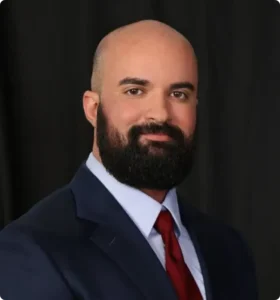
Zachary Gold, Esq., owns Cruz Gold & Associates and is the attorney you speak with at your first consultation. He has more than seven years of legal experience and started his career as a paralegal.
He is a Rutgers University alumnus, earned his law degree at Drexel University, and is a member of the American Immigration Lawyers Association. His mother, Marta Cruz Gold, founded the firm in 1995, and his interest in immigration law comes from his own parents' move to the United States. Read more about Zachary and the firm.
Questions about immigration waivers
Can my U.S. citizen child be my qualifying relative?
Not for unlawful presence. That waiver counts hardship to a spouse or parent who is a U.S. citizen or green card holder (or, for a K-1 applicant, the citizen fiancé(e) who filed the petition), and hardship to your child counts through its effect on that person. The fraud waiver uses the same relatives, except for VAWA self-petitioners, whose fraud waiver can rest on hardship to themselves or to a citizen or green card holder parent or child. For criminal waivers under INA 212(h), a citizen or green card holder son or daughter does count (USCIS Policy Manual).
Can I travel while my I-601A is pending?
Leaving the United States starts the three- or ten-year bar, and a pending I-601A gives you no travel permit. Since August 13, 2026, even a trip on advance parole counts as a departure for these bars, so a green card applicant with more than 180 days of unlawful presence may need a waiver to come back (USCIS: unlawful presence and inadmissibility). The only trip in an I-601A case is the one to the interview, after approval.
Can I appeal an I-601A denial?
No. There is no appeal and no motion to reopen. You can file a new I-601A with a new fee while your visa case is still pending, or attend the interview and file an I-601 from abroad (8 CFR 212.7(e)).
Does a pending waiver protect me from deportation?
No. A pending or approved I-601A does not protect you from removal and gives you no status. If it is denied, USCIS does not automatically send a Notice to Appear; it follows its own guidance on when to start a court case (Form I-601A instructions).
Do I need an I-601 waiver lawyer?
No law requires one, and you may file the I-601 or I-601A yourself. A lawyer checks your whole history before filing, confirms who counts as your qualifying relative, and builds a hardship file complete enough to decide on, which matters because USCIS can deny an I-601A without first asking for more evidence.
Can I file the I-601A online?
No. The I-601A and I-601 are paper filings only, and so is an I-212 sent to USCIS. The fee is paid by card or bank debit with the form. Only an I-212 filed with CBP can be filed online.
How much does an immigration waiver lawyer cost?
You hear our fee at the free consultation, before you decide, and most USCIS waiver work is one flat fee. The USCIS filing fee is separate: $795 for the I-601A, $1,050 for the I-601 and $1,175 for the I-212.
Related pages
Take the First Step Towards Peace of Mind
We’re here to help you navigate your legal journey with confidence and care. Pick a time below for a free 20-minute consultation with attorney Zachary Gold.

Reach Out for Trusted Support

CONTACT US
Phone: (609) 924-8500
Email: [email protected]
830 Bear Tavern Rd Ste 108, Ewing Township, NJ 08628, United States
© 2026 All Rights Reserved | Cruz Gold & Associates | Privacy Policy