H-1B Visa Lawyer
H-1B Petitions for Employers and the Professionals They Hire
Book a free consultation with attorney Zachary Gold, whether you are hiring a professional or you are the one being hired.
- 5.0 101 Google reviews, Ewing office
 AILA memberAmerican Immigration Lawyers Association
- Since 1995Family firm founded by Marta Cruz Gold
- ¡Hablamos español!We work in English and Spanish
How can we help?
Pick a time below for a free 20-minute consultation with attorney Zachary Gold.
How an H-1B visa lawyer helps
An H-1B lets a U.S. employer hire a professional for a job that needs a degree in a specific field. As your H-1B visa lawyer, attorney Zachary Gold checks the job against the degree first, then handles the March registration, the wage filing with the Department of Labor and the petition to USCIS. Employers and workers both start with a free consultation.
H-1B rules changed several times in 2025 and 2026: a lottery that now weighs the offered wage, a $100,000 payment that court orders now bar the government from collecting, and a $4,000 fee that employers with mostly H-1B and L-1 staff now owe on extensions too. DHS has also proposed ending the 60-day grace period after a layoff.
What the H-1B visa is
The H-1B is a temporary work visa for a specialty occupation: a job whose duties need at least a bachelor's degree in a specific, directly related field. The employer files the petition and promises to pay the required wage, and the worker cannot file it alone. One approval runs up to three years, and the stay is generally capped at six years, with longer extensions for people well into the green card process (USCIS).
Most new H-1B workers go through a yearly lottery, because the law allows 65,000 new H-1Bs each year plus 20,000 more for people with a master's or higher degree from a U.S. school (INA 214(g)). Universities, their affiliated nonprofits, and nonprofit or government research organizations hire outside that limit, at any time of year. A worker already counted against the cap in the last six years does not go through the lottery again, unless all of the earlier H-1B time was with cap-exempt employers.
Why employers and workers bring H-1B cases to us
- Attorney Zachary Gold from the first call. The free consultation is with him, and he is the attorney who works on the petition from our Ewing office.
- A flat fee for standard petitions. You know the fee for a standard employment petition before we draft the first form.
- Employers and workers alike. Companies come to us to sponsor a hire, and professionals come to us once an employer has agreed to sponsor them, with their H-4 family in the same plan.
- English and Spanish. Our team works in both languages with employers, workers and their families.
What clients say about working with Zachary
Neither client came to us about an H-1B, and both reviews are quoted from Google as written.
★★★★★“We were going through the immigration process when multiple new memos were published, and Zach was extremely helpful in providing guidance and, honestly, just calming us down.”
Natalie D, Google review, 2026
★★★★★“What really stood out to me was his sense of urgency and how he makes his clients a top priority.”
Lissette, Google review, 2025
How we prepare an H-1B petition
Zachary starts with two documents side by side: the job description and the worker's degree with its transcripts. The degree has to be in a specific field directly related to the duties, and a general degree is not enough on its own (8 CFR 214.2(h)(4)). The problems we see most often begin here, before anything is filed: a degree in a different field from the job, a general business degree for a role that needs a specific one, or duties copied from a generic job listing. Where the education falls short, we build the equivalency: three years of specialized experience can stand in for each missing year of college, and we document that experience with the worker's past employers.
Then comes the wage level, which since the March 2026 lottery decides how many chances the worker gets. The registration, the wage filing and the petition must show the same occupation code and a wage at or above the level claimed in March, and USCIS can reject or deny a petition that does not match (USCIS: H-1B cap season). We settle the occupation and the level with the employer before registration, from the duties the person will really do, because a level picked only to raise the odds has to be paid and proven later.
We also write the duties with the next step in mind. If the employer may later sponsor a green card through PERM, the same job will be in front of the Department of Labor again, so the H-1B should describe it accurately from the start.
- From the employer. The job description, the offered salary, every work address (including remote work and client sites), the company's tax ID, and the number of U.S. employees, which sets several of the fees.
- From the worker. Passport, degrees and transcripts, a credential evaluation for a foreign degree, letters from past employers, and any state license the job needs. A worker already in the United States also brings the I-94 record and current status papers, such as the I-20 and work permit of an F-1 student or earlier H-1B approvals.
H-1B cases we handle
- Cap registrations in March and cap petitions after selection
- Cap-exempt petitions for universities, affiliated nonprofits and research organizations
- Change of employer petitions, often called H-1B transfers
- Extensions, including past six years for workers in the green card process
- Amended petitions for a new worksite or changed duties
- Change of status for F-1 students on OPT, including the cap-gap
- H-4 status and H-4 work permits for spouses and children
- Responses to requests for evidence and notices of intent to deny
- Visa interviews at U.S. consulates abroad
- Options during the 60-day grace period after a layoff
- The green card after the H-1B, through EB-3 and PERM or the EB-2 National Interest Waiver
Who qualifies for an H-1B visa?
You qualify when a U.S. employer offers you a job that needs at least a bachelor's degree in a specific field, you hold that degree or its equivalent, and the employer agrees to pay the required wage.
- The job. It needs at least a bachelor's degree in a directly related specialty and meets one of four tests: the degree is normally the minimum for the occupation, it is normal for parallel jobs in the industry, this employer (or the client where the worker is placed) normally requires it, or the duties are so specialized that they normally call for it (8 CFR 214.2(h)(4)(iii)(A)).
- The worker. A U.S. bachelor's or higher degree in the field, a foreign equivalent, an unrestricted state license to practice the occupation where the job is, or education, training and progressively responsible experience equal to the degree, together with recognized expertise in the specialty. For a missing year of college, three years of specialized experience count (8 CFR 214.2(h)(4)(iii)(C)-(D)).
- The employer. A U.S. employer with a real job open on the start date, a legal presence in the United States and an IRS tax ID. Remote and off-site work inside the United States is allowed. A founder who owns more than half of the sponsoring company can qualify if specialty work takes most of the time, with the first approval and the first extension limited to 18 months each.
- A license, where the state requires one. The worker needs it before USCIS approves the petition, not at filing (8 CFR 214.2(h)(4)(v)).
How does the H-1B lottery work?
Employers register each worker online in March, USCIS selects enough registrations to fill the year's places, and only the employers of selected workers may file a full petition, from April 1.
- Registration. The employer, alone or through its attorney, registers through a USCIS organizational account, and the worker cannot register himself or herself. Each registration costs $215, and an employer may register the same person only once a year: duplicates cancel all of that employer's registrations for the person. The period lasts at least 14 days and is announced at least 30 days ahead (8 CFR 214.2(h)(8)(iii)).
- One entry per person. USCIS selects by worker, so offers from several employers do not raise the odds, and every employer that registered a selected worker may file.
- Weighted by wage. Since the March 2026 season, each worker is entered four times at wage level IV, three times at level III, twice at level II and once at level I, based on the highest level the offered wage meets for that occupation and area. If several employers registered the same person, USCIS uses the lowest of their levels (Federal Register, December 29, 2025).
- A sworn job offer. The employer attests, under penalty of perjury, that the job is real and that it will pay at or above the level it chose. A false attestation voids the registration and can lead to denial, revocation and a referral to law enforcement (USCIS: registration).
- After selection. The employer has at least 90 days to file, the start date can be no earlier than October 1, and the petition can go in no more than six months before that date.
In the March 2026 season, registration opened on March 4, USCIS finished selecting on March 31, and it announced on July 17, 2026 that both the regular and the master's caps were full, with no second round announced (USCIS alert). In that season, workers at wage levels III and IV made up about 46% of those selected and level I about 18%, according to the government's figures in Proclamation 11069. USCIS has not yet announced the dates of the March 2027 registration, for jobs starting October 1, 2027.
Is the $100,000 H-1B fee in effect?
No. The $100,000 payment set by presidential proclamation still exists on paper, but federal court orders bar the government from collecting it. DHS says it disagrees with the orders and is complying, and that it will collect the payment if they are lifted (USCIS).
- The proclamations. Proclamation 10973 of September 19, 2025 made the payment a condition for certain new H-1B workers, and Proclamation 11069 of September 18, 2026 extended it to September 21, 2027, with possible exceptions for one worker, one company or a whole industry (Federal Register).
- The court orders. On June 8, 2026 the federal court in Massachusetts struck down the policies that collect the payment, in a case brought by 20 states including New Jersey, and the First Circuit refused to pause that ruling; the government's appeal there continues, with no ruling on the merits. On September 30, 2026 the federal court in Northern California struck down the policies again and barred the agencies from enforcing policies under either proclamation until they complete notice-and-comment rulemaking and a Regulatory Flexibility Act analysis (court order). The government appealed that order to the Ninth Circuit on October 9. A federal court in Washington, D.C. upheld the 2025 proclamation in December 2025, and that appeal is still undecided.
- Whom it would reach. Under the guidance the courts set aside, the payment applied to new petitions for workers outside the United States without a valid H-1B visa, and to petitions asking for a visa abroad. It did not apply to a change of status or an extension inside the United States that USCIS approves, to visas already issued, or to current H-1B holders traveling on their visas.
Separate from that payment, DHS proposed in August 2026 a $103,265 fee on every cap-subject H-1B petition, including master's cap petitions, on top of all other fees; cap-exempt petitions would not pay it. Comments closed on September 24, 2026, and as of October 21 it has not become final (Federal Register).
How much does an H-1B cost?
USCIS fees for a worker's first H-1B petition from a for-profit employer with more than 25 full-time equivalent U.S. employees come to $3,380 on paper, plus $215 for the lottery registration, before premium processing, legal fees and the $4,000 fee that some larger employers owe (USCIS fee schedule, Form G-1055; H and L filing fees).
- Registration, $215. Per worker, for lottery cases only.
- Form I-129, $780 on paper or $730 online. Employers with 25 or fewer full-time equivalent U.S. employees, and nonprofits, pay $460.
- Asylum Program Fee, $600. $300 for employers with 25 or fewer employees, and nothing for nonprofits.
- Fraud prevention fee, $500. On a worker's first H-1B and on a change of employer.
- ACWIA training fee, $1,500. $750 for employers with 25 or fewer employees. Universities and their related or affiliated nonprofits, nonprofit or government research organizations, primary and secondary schools, and nonprofits running curriculum-related clinical training do not pay it.
- Public Law 114-113 fee, $4,000. For employers with 50 or more U.S. employees of whom more than half hold H-1B or L-1 status, and since September 9, 2026 on their extensions too.
- Premium processing, $2,965. Optional, for USCIS action (an approval, a denial or a request for evidence) within 15 business days.
- H-4 for family members. $470 on paper or $420 online for each Form I-539, and $520 for an H-4 work permit.
- The visa stamp abroad, $205. The State Department fee, plus a reciprocity fee for some nationalities.
The employer pays the ACWIA fee, and the worker can never be charged for it, directly or through pay deductions (20 CFR 655.731(c)). USCIS accepts the premium processing fee from the employer, the worker, the attorney or a representative, although the worker cannot sign or file the request (USCIS: premium processing). Whether Department of Labor wage rules let the employer pass that cost to the worker is a separate question, and we check it first.
How long does an H-1B take?
With premium processing, USCIS approves, denies or asks for more evidence on an H-1B petition within 15 business days. Without it, 80% of petitions were decided within 10 months for a change of status inside the United States, 11 months for a visa to be issued abroad and 11.5 months for an extension, in USCIS figures published October 19, 2026 (USCIS processing times).
Those months run from receipt to the first decision and include time spent answering requests for evidence. With premium processing, a request for evidence stops the 15-day clock, and a new 15 business days start when USCIS receives the answer; if USCIS misses the deadline, it refunds the fee (8 CFR 106.4).
Before any of this, the Department of Labor decides the Labor Condition Application within seven working days, and the employer can file it no more than six months before the start date (20 CFR 655.740; FLAG). A lottery case approved in the summer still starts no earlier than October 1.
Since October 7, 2026, paper petitions from a New Jersey employer go to the USCIS Chicago lockbox with premium processing and to the Phoenix lockbox without it, and petitions sent to the old addresses are accepted if postmarked by November 9, 2026 (USCIS filing addresses). USCIS also accepts H-1B petitions online, for transfers and extensions as well as for selected lottery cases.
Wages and the Labor Condition Application
Before the petition goes to USCIS, the employer files a Labor Condition Application promising to pay the higher of its own actual wage for similar workers or the prevailing wage for the job in that area, for the whole period of employment, and to offer the same benefits it gives U.S. workers (20 CFR 655.731). On or within 30 days before filing, it notifies the union or, without one, posts notice at two or more places at each worksite for a total of 10 days, or notifies workers electronically, where one individual e-mail is enough (20 CFR 655.734). The wage is owed even when the worker sits idle because of the employer's decision, such as having no assignment, and an employer that ends the job before the approved stay ends pays the worker's reasonable trip home.
Employers that depend heavily on H-1B workers, or were found to be willful violators, also promise not to displace U.S. workers from 90 days before to 90 days after filing and to recruit U.S. workers first, unless the H-1B worker earns at least $60,000 a year or holds a related master's degree (20 CFR 655.736).
The Department of Labor launched Project Firewall in September 2025 to investigate displacement of U.S. workers, recruitment failures and misstated job duties, with back wages, penalties and debarment as remedies (U.S. Department of Labor). An executive order of September 18, 2026 tells the agencies to weigh whether the employer laid off similar U.S. workers in the previous year, or plans to, when they review its wage filings, petitions and visas (Federal Register). The Department of Labor has also proposed raising the prevailing wage levels, which would lift level I from about the 17th to the 34th percentile of local wages; as of October 21, 2026 it is still a proposal (Federal Register).
H-1B transfers, extensions and layoffs
A worker in H-1B status may start with a new employer once it files a non-frivolous petition, or on the start date it asks for if that is later. That holds if you were admitted in H-1B status, the new petition is filed before your stay expires and you have not worked without permission, and the permission ends if USCIS denies the petition (INA 214(n)). A worker whose H-1B time so far was all with universities or research employers needs a lottery selection before moving to a regular employer.
The total stay is six years, after which you generally spend a year outside the United States before a new H-1B. Each trip abroad of more than 24 hours during an approval can be added back, proven with passport stamps and travel records (8 CFR 214.2(h)(13)). Past six years, one-year extensions open once a PERM labor certification or an I-140 was filed for you at least 365 days earlier, and three-year extensions once your I-140 is approved but the green card waits on the per-country limits (USCIS). For an F-1 student, a timely lottery petition that asks for a change of status keeps F-1 status and OPT work permission until April 1, or the start date if earlier, and that extension ends if the petition is rejected, denied, revoked or withdrawn, or if the change of status is denied (8 CFR 214.2(f)(5)).
If the job ends, you and your family keep status for up to 60 consecutive days, or until the approval ends if that comes first, once per approval period, without working unless you are otherwise authorized; DHS can shorten or refuse the period in a given case. In that time a new employer can file for you, you can apply for another status, or you can leave (8 CFR 214.1(l)). DHS proposed in September 2026 to remove this grace period entirely, with comments due November 10, 2026; until a final rule takes effect, the 60 days still apply (Federal Register). A second proposal, of October 14, 2026, would end the rule that USCIS defers to an earlier approval on the same facts when it decides an extension (Federal Register).
Can an H-1B spouse work?
Only with an H-4 work permit, and a spouse can get one once the H-1B worker has an approved I-140 immigrant petition, or an extension past six years based on a pending green card case (8 CFR 214.2(h)(9)(iv)). The H-1B worker's spouse and unmarried children under 21 hold H-4 status for the same period as the worker, and H-4 status alone does not allow work.
A renewal of the H-4 work permit can be filed up to 180 days before the card expires, and filing early matters more now. An interim rule of October 30, 2025 ended the automatic extension for renewals filed on or after that date, and DHS made it final on October 14, 2026, so the old card is valid only through its end date, even while the renewal is pending (Federal Register). USCIS reports that 80% of H-4 work permits filed on their own are decided within 17.5 months, and 6.5 months when filed together with an H-4 application on Form I-539 (USCIS processing times). DHS has listed a future rule to end H-4 work permits on its regulatory agenda, without a proposal or a date, so they remain available today (regulatory agenda).
Getting the H-1B visa stamp abroad
A worker coming from abroad, or one who travels, needs an H-1B visa from a U.S. embassy or consulate, and nearly every applicant now goes to an in-person interview, H-4 family members of any age included (State Department). The interview belongs at the embassy or consulate in your country of nationality or residence; applying elsewhere can make it harder to qualify, and the fee is not refunded (State Department). Since December 15, 2025, consular officers also review the online presence of every H-1B applicant and H-4 family member, who are told to set their social media profiles to public (State Department).
Since January 1, 2026, nationals of 19 countries, including Afghanistan, Haiti, Iran, Syria and Yemen, and holders of Palestinian Authority travel documents cannot get H-1B or H-4 visas, with exceptions such as people who already held a valid visa on that date. Nationals of 20 more countries can still get H visas, with shorter validity where the law allows (Proclamation 10998).
Why are H-1B petitions denied?
An H-1B petition can be denied when the job does not count as a specialty occupation, the degree does not fit the job, or the registration, wage filing and petition do not match.
- The job and the degree. Duties that do not need a specific degree, or a degree in a field that is not directly related to them.
- Equivalency. Experience letters that do not show specialized, progressively responsible work.
- A missing license where the state requires one.
- No real job on the start date, or a placement with a client whose own requirements do not call for a specialty degree.
- Mismatches in occupation code, wage level or passport between the registration and the petition.
- Duplicate cap petitions for the same worker by one employer or by related companies without a business reason, which are denied or revoked without a refund (8 CFR 214.2(h)(2)).
Since August 5, 2026, USCIS can deny a petition without first asking for more evidence when the filing does not show eligibility or lacks required evidence (USCIS alert), so the first filing has to carry the whole case. USCIS also makes unannounced visits to employers and client worksites and may interview the worker, and an employer that does not cooperate can see the petition denied or revoked (USCIS).
Laws, fees and processing times on this page were checked on October 21, 2026 on uscis.gov, the Department of Labor and State Department sites, the Federal Register and eCFR, federal statutes, and the court dockets of the cases on the $100,000 payment.
How an H-1B case moves
- Free consultation. Book on the calendar or call, whether you are the employer or the worker, and send the job description and the degree if you have them.
- Plan before March. For a lottery case, we settle the duties, occupation code, wage level and degree equivalency in the fall or winter. Transfers, extensions and cap-exempt cases start at step 4.
- Registration and selection. We submit the registration in the March window, and USCIS selects by the end of March.
- Wage filing and petition. The Labor Condition Application goes to the Department of Labor, then the petition goes to USCIS within the filing window, with premium processing if you choose it.
- Decision and start. We answer any request for evidence. A worker in the United States changes status, on October 1 for a lottery case, and a worker abroad goes to the consulate interview. Later come the extensions and the green card, often through EB-3 and PERM.
Our fee for an H-1B case
We usually charge one flat fee for a standard H-1B petition, set once we know the job, the worker and the kind of case. The government fees listed earlier are separate, and the law decides which of them the employer must pay. If a case needs more than a standard petition, we explain the next steps and the fee before any work begins. Credit cards are accepted, and our page on flat and hourly legal fees explains how the two differ.
Talk to attorney Zachary Gold about your case. The first consultation is free, and you hear the fee before any work begins.
Who will work on your H-1B case
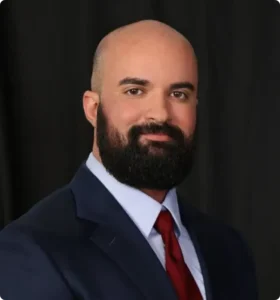
Zachary Gold, Esq. owns Cruz Gold & Associates and is the attorney you speak with at your first consultation. He has more than seven years of legal experience and started his career as a paralegal.
He is a Rutgers University alumnus, earned his law degree at Drexel University, and is a member of the American Immigration Lawyers Association. His mother, Marta Cruz Gold, founded the firm in 1995, and his interest in immigration law comes from his own parents' move to the United States. Read more about Zachary and the firm.
Questions about the H-1B
How much does an H-1B lawyer cost?
A standard H-1B petition with us usually carries one flat fee, and you know the amount before any work begins. Government fees come on top and are listed in the USCIS fee list above.
Who pays the H-1B attorney fees?
Under Department of Labor rules, attorney fees and the cost of preparing the wage filing and the petition are the employer's business expenses. If the worker pays any part of them, it counts as a deduction from pay, and it may not take the worker's pay below the required wage (20 CFR 655.731(c)(9)).
Do I need a lawyer for an H-1B visa?
No law requires one, and an employer can register and file on its own. A lawyer's work is making the pieces agree: the duties with the degree, and the occupation code and wage level from the March registration with the wage filing and the petition. That matters more since USCIS can deny a filing that lacks required evidence without asking for it first.
What happens if I am not selected in the H-1B lottery?
You can be registered again in the next March season, and other routes may fit in the meantime: a job with a university or nonprofit research employer, which hires outside the lottery, or another work visa that may fit, such as the O-1 visa for extraordinary ability, the L-1 visa for company transfers, the TN visa for Canadians and Mexicans or the E-2 treaty investor visa.
What happens if I get laid off on an H-1B?
You generally have up to 60 consecutive days, or until your approval ends if that is sooner, to have a new employer file for you, change to another status, or leave the United States, and you cannot work in that time unless otherwise authorized. DHS has proposed ending this grace period, and until a final rule takes effect it still applies. The section on transfers, extensions and layoffs has the details.
Does an H-1B lead to a green card?
It can. The H-1B is a dual intent visa: a green card case does not by itself count against you when you apply for the visa, enter or extend your stay (INA 214(h)). The usual routes are an employer-sponsored case through PERM and an I-140, or a self-petition such as the EB-2 National Interest Waiver or EB-1A extraordinary ability, and the H-1B can be extended past six years while the case moves.
Related pages
Take the First Step Towards Peace of Mind
We’re here to help you navigate your legal journey with confidence and care. Pick a time below for a free 20-minute consultation with attorney Zachary Gold.

Reach Out for Trusted Support

CONTACT US
Phone: (609) 924-8500
Email: [email protected]
830 Bear Tavern Rd Ste 108, Ewing Township, NJ 08628, United States
© 2026 All Rights Reserved | Cruz Gold & Associates | Privacy Policy