VAWA Lawyer
Your Own Path to a Green Card, Without Your Abuser's Signature
Book a free, confidential consultation with attorney Zachary Gold, and bring whatever papers you can safely take.
- 5.0 97 Google reviews, Ewing office
 AILA memberAmerican Immigration Lawyers Association
- Since 1995Family firm founded by Marta Cruz Gold
- ¡Hablamos español!We work in English and Spanish
How can we help?
Pick a time below for a free 20-minute consultation with attorney Zachary Gold.
How a VAWA lawyer helps
If your husband, wife or parent is a U.S. citizen or green card holder and has abused you, the Violence Against Women Act (VAWA) may let you apply for a green card on your own. At a free consultation, attorney Zachary Gold asks first about three things with strict VAWA rules: the abuser's status, when you lived together, and the date of any divorce.
VAWA protects men as well as women, and it also covers a parent abused by a U.S. citizen son or daughter aged 21 or older. The abuser does not sign the self-petition and does not have to know about it (USCIS).
If you are in danger now, call 911. The National Domestic Violence Hotline answers around the clock at 1-800-799-7233, or text START to 88788. In New Jersey, the statewide hotline is 1-800-572-7233.
What VAWA protection covers
A family green card usually starts with a petition from the U.S. citizen or permanent resident relative, which can leave an abuser in control of your status. A VAWA self-petition on Form I-360 takes that step away from the abuser: you file it yourself, and you apply for the green card yourself, with the self-petition or after it, when a visa is available. The same law reaches people already before an immigration judge, through VAWA cancellation of removal, and conditional residents whose two-year green card came through an abusive marriage.
Abuse does not have to leave marks. Threats of violence, sexual abuse, being locked in or cut off from family, and being denied food or medical care can all count when they are part of an effort to gain or keep control over you (USCIS Policy Manual).
Who qualifies for VAWA?
You can file a VAWA self-petition if one of these describes you (INA 204(a)(1)):
- Spouses. You are or were married to a U.S. citizen or permanent resident who abused you or your child during the marriage. This includes a person who believed in good faith they were married, went through a ceremony, and learned the marriage was invalid only because the abuser was already married.
- Children. You are unmarried, under 21, and were abused by a parent who is a U.S. citizen or permanent resident. If you were eligible the day before your 21st birthday and the abuse was at least one central reason you waited, you can still file until age 25.
- Parents. Your son or daughter is a U.S. citizen aged 21 or older and abused you. Parents abused by a permanent resident son or daughter do not qualify.
Every self-petitioner must also show:
- that you lived with the abuser, and since December 22, 2025, that this shared home was during the marriage or other family relationship
- good moral character, if you are 14 or older
- for spouses, that you entered the marriage in good faith
A divorced spouse must file within two years after the divorce and show that it was connected to the abuse. A spouse whose citizen abuser died has two years from the death, and a spouse or child whose abuser lost citizenship or permanent residence because of domestic violence has two years from that loss. USCIS does not extend these deadlines (USCIS Policy Manual). You can file from outside the United States only if the abuser works for the U.S. government, serves in the U.S. uniformed services, or abused you or your child in the United States.
Working with us while the abuser is still close by
- A confidential first conversation. At the free consultation you speak with attorney Zachary Gold, our team works in English and Spanish, and you tell us which phone number, email and times are safe for us to use.
- Notices that stay out of the shared home. The I-360 lets you name a safe mailing address, such as a post office box, a friend or an attorney's office, so USCIS mail does not go to the home you shared (Form I-360 instructions).
- The route checked before anything is filed. Zachary compares a self-petition with the I-751 abuse waiver, a U visa and relief in immigration court, and if you are already in removal proceedings he takes the case to the judge.
Two clients, in their own words
Neither came to us about VAWA. Both reviews are quoted from Google as written.
★★★★★“The immigration process can be incredibly overwhelming and emotional, but Zach made me feel supported, informed, and reassured every step of the way.”
Karolina Kozdra, Google review, 2026
★★★★★“Throughout the entire process, Zach and his team were very responsive, diligent, and professional.”
Natalie D, Google review, 2026
Building a VAWA self-petition when the abuser holds the papers
Many survivors no longer have a copy of the abuser's green card, passport or naturalization certificate. USCIS can search its own records when you give the abuser's name, date and place of birth, and Social Security number, as far as you know them (USCIS Policy Manual). If the abuser once filed a petition for you, you keep its priority date (8 CFR 204.2(h)(2)).
Zachary then goes through what USCIS decides the case on: your marriage or family relationship and how any earlier marriages ended, where and when you lived together, what the abuse looked like and who saw it or heard about it, and your own record, including any arrest during the relationship.
Since December 2025, USCIS gives less weight to statements that lack detail, so we write yours with you over more than one conversation, with dates, places and the words that were used (USCIS policy alert). If you were arrested during the relationship, the filing explains the link to the abuse: an act connected to the abuse that could be waived for immigration purposes need not bar good moral character, if USCIS agrees in its discretion (INA 204(a)(1)(C)).
What we handle for abuse survivors
- Self-petitions on Form I-360 for abused spouses, children and parents
- Green card applications with or after the self-petition, through adjustment of status
- Work permits for self-petitioners and their children
- Unmarried children under 21 of a self-petitioning spouse or child, in the same petition
- Removing the conditions on a two-year green card after an abusive marriage
- Deportation defense through VAWA cancellation of removal
- Motions to reopen an old removal order on VAWA grounds
- Waivers for an overstay, an earlier removal or an arrest tied to the abuse, with a criminal immigration review where a record is involved
- U visas for victims of domestic violence and other crimes when VAWA does not fit
What evidence do you need for VAWA?
USCIS must consider any credible evidence you submit, and it decides by a preponderance of the evidence, which means more likely than not (INA 204(a)(1)(J); USCIS Policy Manual). Since December 22, 2025, it also requires primary evidence of the marriage, such as a valid marriage certificate and proof that earlier marriages ended (USCIS policy alert). A complete file usually has:
- The abuser's status. A copy of the green card, passport or naturalization certificate, or the details USCIS needs to search its records.
- Your relationship. Marriage, divorce and birth certificates.
- Living together. Leases, utility bills, or employment, school, medical or insurance records showing the same address.
- The abuse. Police and court records, protection orders, medical, school and counseling records, shelter records, photos of injuries with who took them and when, and statements from people who saw it (USCIS Policy Manual; Form I-360 instructions).
- Good moral character. Your own statement and police clearances from each place you lived for six months or more in the last three years.
- A good faith marriage. Joint leases, bank accounts, insurance or tax returns, photos, and statements from people who know you as a couple.
- Your statement. A detailed account in your own words, with dates and places, that connects the rest.
Bring whatever of this you can safely take to the consultation. If something you need is still in the home you shared, talk to us before you try to get it.
Will your abuser find out about a VAWA petition?
Federal law bars officials of the Department of Homeland Security (which includes USCIS and ICE), the Justice Department (which includes the immigration courts) and the State Department from disclosing information about a VAWA case outside those departments, with limited exceptions such as law enforcement and court review. The protection lasts while the case is pending or approved, and ends if the case is denied and all appeals are over. A willful violation carries a civil penalty of up to $5,000 (8 U.S.C. 1367).
In immigration court, a hearing about an abused spouse is closed to the public unless that spouse agrees to open it (8 CFR 1003.27).
The same law forbids an adverse decision on admissibility or deportability based only on what the abuser said, unless you have been convicted of a crime listed in INA 237(a)(2). Since December 22, 2025, USCIS checks for such a conviction first and does not apply this rule when it denies a self-petition or a conditional resident's I-751 (USCIS policy alert). USCIS also ends both protections once the person becomes a citizen (USCIS Policy Manual). If the abuser has told USCIS that the marriage was fake, the evidence of a real marriage has to answer it.
Is there a USCIS fee for VAWA?
USCIS charges no filing fee for the VAWA self-petition on Form I-360, or for the green card application (I-485) and work permit (I-765) of a VAWA self-petitioner, and its fee schedule lists none of the H.R. 1 fees of July 2025 for these three forms. A travel permit (I-131), the I-601 and I-212 waivers, and an I-751 filed alone after abuse also carry no USCIS fee (fee schedule, Form G-1055).
Immigration court has its own fees. Asking the judge for VAWA cancellation of removal on Form EOIR-42B costs $1,690 plus a $30 biometrics fee. A motion to reopen costs up to $1,095 before the judge and $1,060 before the Board of Immigration Appeals, or $950 when it rests only on an application that has no fee (8 CFR 1103.7). You can ask the judge to waive a court fee if you cannot pay it (8 CFR 1003.24).
How long does a VAWA case take?
USCIS reports that 80% of VAWA self-petitions are decided within 52.5 months, more than four years (figures published September 17, 2026, USCIS processing times).
If the filing makes a prima facie case, meaning it addresses every requirement at first look, USCIS issues a Notice of Prima Facie Case. It is valid for one year and renewed every 180 days while the case is pending. It is not a finding that you qualify, and USCIS does not issue it for petitions filed from abroad (USCIS Policy Manual). Spouses and children can use it for some public benefits, under the conditions in 8 U.S.C. 1641.
When a visa is available, the green card application can be filed with the self-petition, together with a request for a work permit based on it. USCIS reports that 80% of work permits based on a pending green card application, across all categories, are decided within 12.5 months. Once the self-petition is approved, you can get a work permit valid for up to two years. Since October 30, 2025, filing a renewal no longer extends an expiring card, so renewals need to go in early (Federal Register).
USCIS may call you to an interview at the field office for your address: Mount Laurel for the Ewing area, Newark for Hackensack, and the Philadelphia and Houston field offices for those cities (USCIS field offices by ZIP code). USCIS says the officers who interview VAWA applicants are trained in trauma-informed techniques and the confidentiality rules (USCIS).
When can a VAWA self-petitioner get a green card?
The green card application can be filed with the self-petition or after it, whenever a visa is available, and USCIS approves it only after the self-petition is approved (USCIS: green card for a VAWA self-petitioner). When a visa is available depends on the family relationship:
- Spouse, child or parent of a U.S. citizen. You are an immediate relative, so a visa is always available.
- Spouse or child of a permanent resident. You are in the F2A category, or F2B once a child turns 21. For October 2026, USCIS uses the Dates for Filing chart, where F2A is current for every country, so an F2A application can be filed now whatever the priority date (USCIS filing charts). Approval still waits for the final action date: September 22, 2026 for most countries and March 22, 2026 for Mexico (Visa Bulletin, October 2026).
VAWA also removes obstacles that stop other applicants:
- an approved self-petitioner can get a green card inside the United States even after entering without inspection, and the bars for working without permission or falling out of status do not apply (INA 245)
- there is no affidavit of support and no public charge test
- the three- and ten-year bars for unlawful presence do not apply when there is a substantial connection between the abuse and the overstay or other visa violation, and the permanent bar for returning without permission can be waived on Form I-601 when the abuse is connected to the removal, departure or return (INA 212(a)(9))
- the criminal grounds covered by the 212(h) waiver can be waived without showing hardship to a relative
Other grounds of inadmissibility still apply, and the green card is a discretionary decision. A May 2026 USCIS memo tells officers to weigh immigration violations, fraud and conduct inconsistent with an earlier status (USCIS memo).
VAWA in immigration court
The self-petition is always filed with USCIS, even during a court case, and the judge generally decides the green card application (8 CFR 245.2). The court also has VAWA relief of its own:
- VAWA cancellation of removal. For a person abused by a spouse or parent who is a U.S. citizen or permanent resident, or whose child was abused by such a parent (INA 240A(b)(2)). It needs three years of continuous presence, good moral character, and extreme hardship to you, your child or your parent if you are removed, and it is barred by certain criminal and security grounds, marriage fraud and any aggravated felony conviction. The Notice to Appear does not stop the three-year clock, and time abroad connected to the abuse does not break it. Grants count toward the 4,000 cancellations judges may grant each year.
- Reopening an old removal order. Within one year of the final order and while in the United States, you can ask to reopen the case, attaching the cancellation application or the self-petition. The one-year limit can be waived for extraordinary circumstances or extreme hardship to your child, only one VAWA motion is allowed (Matter of B-S-H-, 2025), and filing it pauses removal only in limited cases (INA 240(c)(7)(C)(iv)).
- A missed hearing. Abuse of you, your child or your parent counts as an exceptional circumstance, and a motion to cancel an order issued in your absence for that reason is due within 180 days (INA 240(e)).
A pending VAWA case does not stop ICE on its own. In 2025 ICE withdrew the policy under which it held off on enforcement against VAWA applicants, and its officers now consult ICE lawyers first (ICE interim guidance 11005.4). Board of Immigration Appeals decisions in Matter of B-N-K-, 2025 and Matter of Ibarra-Vega, 2026 have also narrowed when a judge may close a case to wait for USCIS. A continuance turns mainly on how likely the USCIS case is to succeed and whether it would change the outcome in court (Matter of L-A-B-R-), which the judge measures against the self-petition already on file.
A two-year green card through an abusive marriage
A green card through a marriage less than two years old is conditional, and both spouses normally file Form I-751 together to remove the conditions. If your spouse abused you or your child during the marriage, you can file it alone, whether you are still married, separated or divorced. USCIS policy and the form instructions allow this at any time before a final removal order, without waiting for the usual 90-day window, and there is no USCIS fee (USCIS Policy Manual; Form I-751 instructions; Form G-1055).
You still show that you entered the marriage in good faith. The abuse can be proven with police and court records, protection orders, shelter or medical records, photos and statements, and USCIS policy does not require a psychological evaluation. The receipt notice extends your status for 48 months (USCIS: removing conditions). The same route is open to a fiancé or fiancée who came on a K-1 visa and married the petitioner.
Protection orders in New Jersey, Pennsylvania and Texas
VAWA does not require a protection order, and USCIS lists one among the evidence of abuse when you have it (Form I-360 instructions). In the three states where we have offices, the orders work like this:
- New Jersey. A temporary restraining order can be issued without the abuser present, and the hearing on a final restraining order follows within 10 days in the Family Part (New Jersey Courts). A final restraining order has no end date unless the court changes it (New Jersey Courts FAQ).
- Pennsylvania. A Protection From Abuse case gets a hearing within 10 business days, with a temporary order in an emergency (23 Pa.C.S. 6107). A final order lasts up to three years and can be extended (23 Pa.C.S. 6108).
- Texas. A temporary ex parte protective order lasts up to 20 days (Tex. Fam. Code ch. 83), and a final protective order generally up to two years, longer after certain findings (Tex. Fam. Code ch. 85).
If you were arrested in the same incident, police and court records also matter for your own status. Immigration law lets officials waive a domestic violence ground for a person who was battered or subjected to extreme cruelty and was not the primary aggressor, for example someone who acted in self-defense (INA 237(a)(7)).
Why are VAWA cases denied?
A self-petition can be denied when any requirement is not proven, including for these reasons:
- Abuse that USCIS does not see as extreme. Since December 2025, USCIS treats hurtful conduct or conflict of limited severity as falling short, and looks for conduct aimed at gaining or keeping power and control (USCIS Policy Manual).
- No shared home during the relationship. Since December 22, 2025, living together only before the marriage or after it ended does not count, including in cases already pending on that date (USCIS policy alert).
- Missing evidence. Since August 2026, USCIS can deny without first asking for evidence that should have been filed, and it gives at most 12 weeks to answer a request for evidence (USCIS Policy Manual).
- The abuser's status. If it cannot be shown, the self-petition is denied.
- Remarriage too soon. A spouse who remarries before USCIS decides the self-petition is denied. After approval, remarriage does not affect it (INA 204(h)).
- Your record. An arrest or conviction needs an explanation, and good moral character has to hold until the green card is decided.
A denial can be appealed or reopened on Form I-290B, or a new self-petition can be filed. Under a February 2025 USCIS policy, a person denied without lawful status can receive a Notice to Appear (USCIS memo).
Laws, fees and processing times on this page were checked on October 7, 2026 on uscis.gov, justice.gov/eoir, ice.gov, the Federal Register and eCFR, the State Department's Visa Bulletin, federal statutes, the New Jersey Courts site, and Pennsylvania and Texas statutes.
How a VAWA case moves
- Book when it is safe. Use the booking calendar or call, and tell us how and when we may contact you.
- Evidence and your statement. We collect the records and write your statement with you.
- Filing. The self-petition goes to USCIS with a safe mailing address, and the green card application goes with it when a visa is available.
- The prima facie notice. If the filing makes a prima facie case, USCIS sends the notice while the self-petition waits for a decision.
- Interview and decision. If USCIS calls you to an interview, we prepare you for it. After the self-petition is approved, USCIS decides the green card application, and later you can apply for citizenship when you qualify.
Our fee for a VAWA case
Our USCIS work on a VAWA case usually has one flat fee, explained before any work begins. If the case goes to immigration court, that work is billed by the hour against a retainer, and the court fees listed earlier apply. Credit cards are accepted, and our page on flat and hourly legal fees explains how the two differ.
Talk to attorney Zachary Gold about your case. The first consultation is free, and you hear the fee before any work begins.
Who will work on your VAWA case
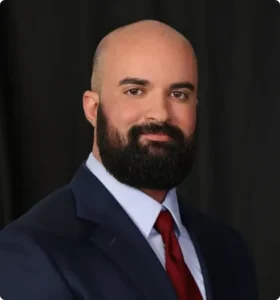
Zachary Gold, Esq. owns Cruz Gold & Associates and is the attorney you speak with at your first consultation. He has more than seven years of legal experience and started his career as a paralegal.
He is a Rutgers University alumnus, earned his law degree at Drexel University, and is a member of the American Immigration Lawyers Association. His mother, Marta Cruz Gold, founded the firm in 1995, and his interest in immigration law comes from his own parents' move to the United States. Read more about Zachary and the firm.
Questions about VAWA
Can a man apply for VAWA?
Yes. VAWA protects men and women alike, and the requirements are the same for everyone (USCIS questions and answers).
Can I apply for VAWA after a divorce?
Yes, within two years after the divorce, if you can show the divorce was connected to the abuse. The divorce decree does not have to name abuse as its reason. USCIS does not extend this deadline (USCIS Policy Manual).
Can I apply for VAWA if I entered illegally?
Yes. Lawful entry is not one of the requirements for a self-petition, and once it is approved you can apply for a green card inside the United States without having been admitted, although other grounds of inadmissibility and USCIS discretion still apply. If you also left and came back without permission after more than one year of unlawful presence in total, or after a removal order, you face the permanent bar. USCIS can waive it on Form I-601 if you show a connection between the abuse and the removal, departure or return (INA 212(a)(9)(C)).
What happens to the abuser in a VAWA case?
The self-petition is your application alone: the abuser is not a party to it and signs nothing, and federal law bars immigration officials from disclosing it to the abuser. Criminal charges and protection orders are separate cases in other courts. An abuser who was admitted to the United States without becoming a citizen, and whom a court finds violated the part of a protection order against credible threats of violence, repeated harassment or bodily injury, can become deportable (INA 237(a)(2)(E)).
Is VAWA the same as a U visa?
No. VAWA covers abuse by a spouse or parent who is a U.S. citizen or permanent resident, or by an adult son or daughter who is a citizen, and it needs no police certification. A U visa can rest on domestic violence or another listed crime by anyone, if you suffered substantial physical or mental abuse from it, and it requires a certification from an official of a law enforcement or other certifying agency that you helped or are likely to help. Only 10,000 U visas go to principal applicants each year (USCIS: U visa). We look at both at the consultation.
Does VAWA protect you from deportation?
A pending self-petition does not stop ICE from acting. After approval, USCIS can grant deferred action case by case, and the green card gives you permanent status. If you are already in immigration court, the judge can decide a green card application on an approved self-petition or grant VAWA cancellation of removal, and after a final order a VAWA motion to reopen can bring the case back.
Is VAWA still in effect in 2026?
Yes. The VAWA self-petition is part of the Immigration and Nationality Act and has no end date (USCIS Policy Manual); what Congress authorizes for set years is grant funding, now through fiscal year 2027 (34 U.S.C. 10261). USCIS has not paused VAWA cases as a group.
How much does a VAWA lawyer cost?
It depends on whether the case stays with USCIS or goes to immigration court. USCIS filings usually carry one flat fee, court work is billed by the hour, and either way you hear the fee before any work begins.
Related pages
Take the First Step Towards Peace of Mind
We’re here to help you navigate your legal journey with confidence and care. Pick a time below for a free 20-minute consultation with attorney Zachary Gold.
Reach Out for Trusted Support

CONTACT US
Phone: (609) 924-8500
Email: [email protected]
830 Bear Tavern Rd Ste 108, Ewing Township, NJ 08628, United States
© 2026 All Rights Reserved | Cruz Gold & Associates | Privacy Policy