Visa Lawyer
Need a U.S. Visa? Start With the One That Fits Your Plans
Book a free consultation with attorney Zachary Gold to learn which visa you need for work, investment, study or marriage, and who has to file for it.
- 5.0 104 Google reviews, Ewing office
 AILA memberAmerican Immigration Lawyers Association
- Since 1995Family firm founded by Marta Cruz Gold
- ¡Hablamos español!We work in English and Spanish
How can we help?
Pick a time below for a free 20-minute consultation with attorney Zachary Gold.
How a visa lawyer helps
A visa lawyer works out which U.S. visa matches the reason you are coming, then prepares the petition or application and gets you ready for the consulate interview. At Cruz Gold & Associates, attorney Zachary Gold handles work, investor, student and fiancé(e) visas. The free consultation is with him, and you leave it knowing which visa to pursue.
If you are already in the United States, we also ask USCIS to extend your stay or change your status, which has to be filed before the date on your I-94 record passes.
The visa, the I-94 and how long you can stay
A visa lets you travel to a U.S. airport, seaport or land border and ask to be let in. The officer from Customs and Border Protection at the port of entry decides whether to admit you and for how long, and records that date on your I-94 (State Department). The I-94 date is the one that tells you how long you may stay, so a visa can expire while your stay is still valid.
Temporary visas, called nonimmigrant visas, cover visits, work, study, exchange programs and fiancé(e)s. Immigrant visas lead to a green card, which our green card lawyer page covers. Most nonimmigrant applicants must also convince the consular officer that they will leave at the end of the stay, with ties abroad such as a job, a home or family. H-1B and L-1 workers and their families are excused from that showing (State Department: visa denials, INA 214(b) and (h)), and an O-1 worker may seek a green card at the same time (8 CFR 214.2(o)(13)).
Some visas need a petition first. For an H-1B, L-1 or O-1, the U.S. employer (for an O-1, also a U.S. agent) files Form I-129 with USCIS, and the worker applies for the visa only after approval (USCIS Form I-129); for a K-1, the U.S. citizen files Form I-129F (USCIS Form I-129F). Visitors on a B-1 or B-2, students on an F-1 or M-1, exchange visitors on a J-1 and treaty investors on an E-2 go straight to a consulate, a student with a Form I-20 from the school and an exchange visitor with a Form DS-2019 from the program. Canadian professionals apply for TN status at a port of entry or a preclearance station, while Mexican professionals first get a TN visa at a consulate (8 CFR 214.6).
Visas by the reason you are coming
- To work for a U.S. employer: the H-1B for a job that needs a degree in a specific field, the O-1 for people with extraordinary ability, the L-1 for a transfer inside a multinational company, and TN status for Canadian and Mexican professionals. Companies hiring from abroad can start with our page on business immigration for employers.
- To invest in and run a business: the E-2 treaty investor visa, for citizens of treaty countries who put a substantial investment into a real U.S. business and direct it. A green card through investment is a different case, the EB-5.
- To study or train: student visas, meaning the F-1 for academic study at a college, university, high school or language school, the M-1 for a vocational program and the J-1 for an exchange program.
- To marry a U.S. citizen: the K-1 fiancé(e) visa, which brings your partner here to marry you within 90 days of arrival. A couple already married follows the marriage green card route instead.
- To stay longer, or for a different purpose: a request to extend your stay or change to another status, filed in the United States before your authorized stay ends.
- To live here permanently: an immigrant visa through family or work, explained on our green card lawyer page.
Why people bring visa cases to Cruz Gold & Associates
- Zachary Gold on your case. He holds the free consultation himself and prepares the filing from our Ewing office.
- A straight answer on the visa. If your plans call for a different visa, or none yet, you hear that at the consultation, together with what would change it.
- A flat fee for standard cases. You know the fee for a standard petition or application before we draft the first form.
- The same firm for the green card. When a temporary visa is a step toward living here, the same team plans the green card and, later, your citizenship application.
- English and Spanish. Our team works in both languages with you, your employer and your family.
What Ewing clients say
★★★★★“We reached out to Zach last minute during the final stages of our immigration process while we were in Brazil, and I am so grateful that we did. Even though he came into our case late, he jumped right in, fired off the right emails to the appropriate parties, and helped get things moving again when we felt stuck.”
Alisandra Colon, Google review, 2025
★★★★★“We were going through the immigration process when multiple new memos were published, and Zach was extremely helpful in providing guidance and, honestly, just calming us down.”
Natalie D, Google review, 2026
★★★★★“One thing I really appreciated is that he will never pressure you into doing something just to take your money. If something is not necessary or he feels he cannot help with it, he will be upfront and honest with you.”
Marly Lisa White, Google review, 2026
Results may vary depending on your particular facts and legal circumstances.
How we prepare a visa case
Zachary starts with the reason you are coming and works back to the visa: the job and its duties, the business and the money going into it, the school program, or the relationship. Then he goes through your history: every visa you have held, each entry and the dates on your I-94 records, any time past an authorized stay, earlier refusals and the section of law printed on the refusal letter, and any arrest anywhere.
Before anyone files, we look for the problems that sink a visa case: a DS-160 answer that does not match an earlier application, a job described one way in the petition and another way at the interview window, public social media profiles that tell a different story from the application, or a new application after a 214(b) refusal that shows nothing new. The profiles matter more now that officers review the online presence of students, exchange visitors, H-1B and TN applicants and others (State Department, September 2026).
What we ask you to collect:
- your passport and every earlier visa, I-94 record and approval notice
- any refusal letter, with the section of law it cites
- for a work visa, the job offer, your CV, degrees and transcripts
- for an investor visa, proof of the investment and where the money came from
- for a student visa, the Form I-20 or DS-2019 and proof of how you will pay for the program
- for a fiancé(e) visa, proof of your relationship
- certified court records for any arrest, whatever the outcome
You may face the consular officer without us in the room, since each consular section decides whether attorneys may attend visa interviews (9 FAM 602.1-2). We prepare you beforehand instead: why you are traveling, the ties the visa requires you to show, and the documents to bring, so that your answers match your file.
Visa cases we handle
- H-1B petitions, transfers and extensions
- O-1A and O-1B petitions, including through an agent or a U.S. company you own
- L-1A and L-1B transfers, including a new office in the United States
- E-2 treaty investor visas for people who buy or start a business
- TN status for Canadian and Mexican professionals
- F-1, M-1 and J-1 student and exchange visas
- K-1 fiancé(e) petitions and the consulate interview
- Visas for the spouse and children of a worker, investor or student
- Extending a stay or changing status inside the United States
How do you get a U.S. visa?
You file Form DS-160 online, pay the visa fee and book an interview at a U.S. embassy or consulate, after USCIS approves a petition if your visa needs one (State Department: DS-160). State tells nonimmigrant applicants to book the interview in their country of nationality or residence. Applying anywhere else can make it harder to qualify, the fee is not refunded or moved, and the wait is significantly longer; nationals of countries without routine visa services apply at the post State designates (State Department, July 15, 2026).
Expect to be interviewed in person. Since September 2025 almost every applicant is, children and older adults included. The main exception left is renewing a full-validity B-1 or B-2 visitor visa within 12 months of its expiration, if it was issued when you were at least 18, you apply in your country of nationality or residence and you have never been refused, and even then the officer can still call you in (State Department, September 18, 2025). Students, exchange visitors, H-1B workers and their families, fiancé(e)s, and since October 1, 2026 TN professionals and their families must also set their social media profiles to public for the online presence review.
How much does a U.S. visa cost?
The State Department charges a nonimmigrant visa application fee per person (22 CFR 22.1), and petition-based visas add USCIS fees (USCIS fee schedule, Form G-1055):
- Visa application fee$185 for visitors, students, exchange visitors and TN professionals; $205 for petition-based work visas such as the H-1B, L-1 and O-1; $315 for E visas; $265 for the K-1
- Employer petition (Form I-129), on paper$780 for an H-1B, $1,385 for an L-1, $1,055 for an O-1, $1,015 for an E or TN petition filed in the United States; $50 less online, and lower fees for nonprofits and for employers with 25 or fewer full-time equivalent U.S. employees, affiliates included
- Asylum Program Fee with Form I-129$600, or $300 for small employers; nonprofits pay none
- Fiancé(e) petition (Form I-129F)$675
- Extending or changing status (Form I-539)$470 on paper, $420 online
- Premium processing (Form I-907)$2,965 for most work petitions; $2,075 for a change to student or exchange status
- SEVIS fee for students and exchange visitors$350 for an F-1 or M-1, $220 for most J-1s (ICE)
Some nationalities also pay a reciprocity fee when the visa is issued. Visitor visa applicants from 50 countries can be told at the interview to post a bond of $10,000, $15,000 or $20,000, which is cancelled and refunded when they leave on time (State Department: visa bonds). An H-1B petition carries further employer fees. The $100,000 payment set by proclamation runs through September 21, 2027, but it is not being collected: the District of Massachusetts vacated the agency guidance in June 2026 and the Northern District of California barred the agencies from enforcing their policies under it on September 30, 2026, and appeals are pending (USCIS). Our H-1B page explains both.
How long does a U.S. visa take?
For a visa that needs a petition, most of the wait is at USCIS. On October 19, 2026, USCIS listed these times for completing 80% of petitions, all decided by its Service Center Operations (USCIS processing times):
- H-1B petition for a worker abroad11 months
- L-1 petition6.5 months
- O-1 petition14.5 months
- TN petition filed with USCIS4.5 months
- K-1 fiancé(e) petition (Form I-129F)13 months
- Extending a visitor's stay (Form I-539)8.5 months
Premium processing shortens most work petitions to 15 business days, and a change to student or exchange status to 30 business days: USCIS acts within that time or refunds the fee (USCIS premium processing). It is not offered for a K-1 petition or a visitor's extension.
After that, the wait for an interview depends on the consulate. State's global visa wait times table shows the next appointment at each embassy, without any time a case spends in administrative processing. A new student can get the visa up to 365 days before the program starts but may enter no more than 30 days before it.
Can you extend a visa or change status in the United States?
You can ask USCIS to extend your stay or change your status, as long as you file before the date on your I-94 passes. USCIS approves a late filing only when extraordinary circumstances beyond your control caused the delay, and it suggests filing at least 45 days early (8 CFR 214.1(c), USCIS Form I-539).
For an H-1B, L-1, O-1, E or TN worker, the employer files Form I-129; visitors, family members and anyone changing to student or exchange status file Form I-539. Visitors who came under the Visa Waiver Program without a visa cannot extend, and neither can K-1 fiancé(e)s, who adjust status after the wedding instead. A worker whose extension with the same employer was filed on time may keep working for up to 240 days past the I-94 date while USCIS decides (8 CFR 274a.12(b)(20)). A B-1 or B-2 visitor who wants to study may not start classes until USCIS approves the change to F-1 or M-1, and enrolling earlier leads to a denial (8 CFR 248.1(c)).
Students and exchange visitors are still admitted for the length of their program, known as "duration of status". A rule published in July 2026 would set fixed end dates instead, but a federal court in Massachusetts postponed it on September 14, 2026, and USCIS follows the previous rules (USCIS Form I-539).
Why are visas refused or delayed?
Most refusals rest on one of a few sections of the immigration law, and the letter names the section that applies (State Department: visa denials):
- Section 214(b). The officer was not convinced that you qualify for the visa or that you will leave at the end of the stay. There is no waiver and no appeal; you can apply again with a new DS-160 and fee, and you should show what has changed since.
- Section 221(g). The officer needs more documents, or the case goes into administrative processing. You have one year to send what the letter asks for without a new application, State sets no standard time for administrative processing, and the visa status check shows where the case stands.
- An earlier overstay. Staying past the I-94 date voids the visa, unless you filed an extension or change of status on time and it is still pending, and the new visa generally has to be issued in your country of nationality (INA 222(g)). More than 180 days of unlawful presence followed by a departure brings a 3-year bar, and a year or more a 10-year bar (INA 212(a)(9)(B)).
- The travel ban. Since January 1, 2026, Proclamation 10998 suspends all visas for nationals of 19 countries. For nationals of 19 more it suspends visitor, student, exchange and immigrant visas, and for Turkmenistan immigrant visas only. People who already held a valid visa on that date are among the exceptions (Federal Register).
- Other grounds of inadmissibility, such as certain criminal records or an earlier misrepresentation. For a nonimmigrant visa, a waiver goes to the Department of Homeland Security, usually on the consular officer's recommendation.
A visa can also be revoked at any time after it is issued (INA 221(i)), and State said in August 2026 that it had revoked more than 175,000 visas under the current administration, mostly after encounters with law enforcement (State Department, August 10, 2026). Courts generally cannot review a consular officer's decision, a rule the Supreme Court applied in Department of State v. Muñoz (2024).
Fees, processing times and rules on this page were checked on November 3, 2026 on uscis.gov, travel.state.gov, the Federal Register, eCFR, federal statutes and federal court dockets.
The visa process, step by step
- Free consultation. We match your plans to a visa and tell you which forms come first.
- The petition, if your visa needs one. We prepare the employer's Form I-129 or your fiancé(e)'s Form I-129F, with premium processing where it is offered and worth the fee.
- The application. You file the DS-160, pay the visa fee and book the interview in your country of nationality or residence, with our review of every answer first.
- Interview preparation. We go over the questions, your history and the documents to bring.
- The interview. The officer issues or refuses the visa. A refusal under 221(g) means the consulate needs more documents or more time, and you have a year to send what it asks for.
- Arrival. The officer at the port of entry admits you and sets the date on your I-94, and we note it for any extension or your next status.
Our fee for a visa case
We usually charge one flat fee for a standard visa petition or application, set once we know the visa and the case, and you hear the amount before any work begins. Government fees are paid separately. When a case needs more than a standard filing, we explain the extra steps and their fee first. We accept credit cards. Our page on flat and hourly legal fees explains how the two kinds of fee differ.
Talk to attorney Zachary Gold about your case. The first consultation is free, and you hear the fee before any work begins.
Attorney Zachary Gold
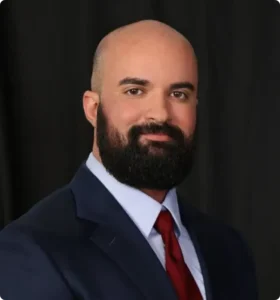
Zachary Gold, Esq. owns Cruz Gold & Associates and is the attorney you speak with at your first consultation. He has more than seven years of legal experience and started his career as a paralegal.
He is a Rutgers University alumnus, earned his law degree at Drexel University, and is a member of the American Immigration Lawyers Association. His mother, Marta Cruz Gold, founded the firm in 1995, and his interest in immigration law comes from his own parents' move to the United States. Read more about Zachary and the firm.
Questions about U.S. visas
How much does a visa lawyer cost?
A standard visa petition or application usually has one flat fee at Cruz Gold & Associates, quoted at the free consultation. Government fees come on top, for example $185 to apply for a student or visitor visa, or $780 for the base H-1B petition on paper before the $600 Asylum Program Fee and the other employer fees.
Do I need a lawyer to apply for a visa?
You can apply without one, and many visitors do. A lawyer helps most when an employer or fiancé(e) petition comes first, when you have an earlier refusal or overstay, or when you want to change status without leaving the United States.
Can a lawyer come to my visa interview?
At a U.S. consulate it depends on the post: each consular section decides whether attorneys may attend visa interviews (9 FAM 602.1-2). At a USCIS interview inside the United States, you have the right to bring your lawyer (8 CFR 292.5(b)).
My visa expired but my I-94 is still valid. Can I stay?
Yes. The visa only governs your trip to the border, and the date on your I-94 decides how long you may stay. To come back after a trip abroad, you will generally need a new visa.
What happens if my visa is denied?
That depends on the section of law on the refusal letter. After a 214(b) refusal you can apply again once your circumstances have changed, and after a 221(g) refusal you have a year to send what the consulate asks for. There is no appeal of a consular refusal.
Are U.S. visa interviews paused?
There was no worldwide pause on November 3, 2026. Nationals of 39 countries face full or partial suspensions under Proclamation 10998, and a few embassies, such as the one in Kinshasa, have paused visa services, so check the page of the embassy where you plan to apply.
Related pages
Take the First Step Towards Peace of Mind
We’re here to help you navigate your legal journey with confidence and care. Pick a time below for a free 20-minute consultation with attorney Zachary Gold.

Reach Out for Trusted Support

CONTACT US
Phone: (609) 924-8500
Email: [email protected]
830 Bear Tavern Rd Ste 108, Ewing Township, NJ 08628, United States
© 2026 All Rights Reserved | Cruz Gold & Associates | Privacy Policy