Marriage Green Card Lawyer
A Green Card for Your Husband or Wife, Here or Abroad
At a free consultation, attorney Zachary Gold checks how your spouse entered the country and which route to a green card fits your marriage.
- 5.0 104 Google reviews, Ewing office
 AILA memberAmerican Immigration Lawyers Association
- Since 1995Family firm founded by Marta Cruz Gold
- ¡Hablamos español!We work in English and Spanish
How can we help?
Pick a time below for a free 20-minute consultation with attorney Zachary Gold.
How Zachary handles a marriage green card case
Attorney Zachary Gold prepares the petition that shows your marriage is real, the green card application or visa case for your husband or wife, and the two of you for the interview. His first question is how your spouse came into the country: with a visa, with parole, or across the border without inspection. That answer decides whether the green card can be granted here and what could block it.
Since October 17, 2025 the petitioner must prove the marriage is genuine before the I-130 is approved, and USCIS reviews it again when it decides a green card application filed in the United States (USCIS policy alert). Spouses are interviewed unless USCIS waives it (USCIS Policy Manual), and since August 5, 2026 a petition filed without the required initial evidence can be denied without a request for evidence first (USCIS policy alert).
Married to a U.S. citizen or to a green card holder?
Your own status decides whether your spouse waits in a visa line (USCIS). The husband or wife of a U.S. citizen is an "immediate relative", and the law sets no yearly limit on those visas, so there is no line once the petition is approved (INA 201(b)). If that spouse was inspected and admitted or paroled into the United States, the petition (Form I-130) and the green card application (Form I-485) can go in together.
The husband or wife of a green card holder is in the F2A category and waits by the date the I-130 was filed. In the November 2026 Visa Bulletin, F2A visas go to petitions filed before October 22, 2026 (April 22, 2026 for Mexico), and the chart USCIS uses this month for green card filings shows F2A as current (Visa Bulletin, November 2026; USCIS filing charts). An F2A spouse here can usually apply only after keeping lawful status the whole time and never working without permission, because the exceptions that protect citizens' spouses do not reach F2A; violations that were not the spouse's fault or were only technical are excused, and an old petition under 245(i) is the main way around the rule (INA 245(c)). If you naturalize while the petition is pending, it becomes an immediate relative petition and keeps its filing date (USCIS).
Your spouse's children need their own planning. A citizen files a separate I-130 for each child, and a stepchild qualifies only if you married the child's parent before the child turned 18 (INA 101(b)). A green card holder's spouse can bring children under 21 on the same petition, but those children lose that place if the green card holder later becomes a citizen (USCIS Policy Manual), and a separate petition for each child avoids that (for a stepchild, only if you married the parent before the child turned 18).
Why couples bring their marriage case to Cruz Gold & Associates
- Zachary goes to the interview with you. Clients describe him at their green card interviews and their second interviews.
- Interview practice first. Before the appointment we run mock interviews with both of you.
- The evidence is planned before filing. Zachary reviews what you already have and tells you what is missing.
- Every stage with one attorney. We file the petition, the green card application or visa case, the petition to remove conditions two years later and, when you qualify, the citizenship application.
- Flat fees, in English or Spanish. Each stage of the case has its own flat fee, and you can work with us in Spanish.
What married couples say about Zachary
★★★★★“He helped us prepare for our upcoming Stokes interview, advised us on additional evidence to submit, and attended the interview with us. Thanks to his guidance, our I-130 was approved the day after the interview.”
Amal Ahmed, Google review, 2026
★★★★★“We hired Zach for our adjustment of status interview and it couldn't have gone better!”
Roberto A. Tejada Arevalo, Google review, 2026
Results may vary depending on your particular facts and legal circumstances.
How do you prove your marriage is real?
You prove that you married in good faith, meaning you intended to build a life together when you married. USCIS looks at that intent at the start and does not judge whether the marriage will last (USCIS Policy Manual). The petition carries the marriage certificate from the civil authority (a marriage license is not enough), proof that every earlier marriage of either spouse ended, proof of your citizenship or green card, and Form I-130A, filled out by your spouse (USCIS). Then comes the proof of your shared life. USCIS names the kinds of evidence below (Form I-130 instructions), and the examples are the usual ways couples show them:
- A home togethera joint lease or deed, or bills and mail at one address
- Money togetherjoint bank accounts, shared insurance, tax returns filed as a married couple
- Childrenbirth certificates that name you both
- People who know yousworn statements from friends or family giving their full name, address, date and place of birth, and how they know of your marriage
- Your history as a coupleanything else that shows an ongoing marriage, such as photos over time and travel together
A divorce counts only once it is final, and a legal separation does not end a marriage. A foreign divorce is generally recognized when the court had jurisdiction and both spouses had notice, and if you married in the United States, USCIS also checks that the state where you married accepts that divorce. A proxy or online wedding counts if it is valid where it was registered, is not against the public policy of the state where you live and, when you were not together for it, the marriage was consummated afterward. Same-sex marriages meet the same rules as any other (USCIS Policy Manual).
What the marriage interview looks like
Unless USCIS waives it, the interview takes place at the field office for your address, and the citizen or green card holder spouse generally comes too (USCIS Policy Manual). For our offices those are Mount Laurel for the Ewing area, Newark for Hackensack, and the Philadelphia and Houston field offices (USCIS field offices by ZIP code). The officer may question you together or separately, at any stage, and USCIS policy calls for another interview when the marriage is still in doubt after the first one (USCIS Policy Manual). Couples often call that second interview a Stokes interview.
Zachary goes through the questions with each spouse alone and then with both of you, and reads your file as an officer would, looking for places where your answers and your papers tell different stories, such as the date you moved in, who pays which bill or the name of an in-law. When a parent or sibling cannot write a statement because the relationship is strained, we build the record from other evidence of your life together. On the day, he is in the room with you, as USCIS has required of attorneys at field office interviews since May 18, 2026 (USCIS), and he can explain your case to the officer.
Couples and situations we take on
- Spouses of U.S. citizens applying inside the United States
- Spouses abroad, through the National Visa Center and a U.S. consulate
- Spouses of green card holders in the F2A category
- Second interviews and requests for evidence on marriage petitions
- Removing the conditions on a two-year green card, jointly or with a waiver
- Marriages entered while one spouse is in immigration court
- Earlier marriages and foreign divorces that need documenting
- Same-sex marriages
- Spouses who must leave for a consular interview and need an I-601A waiver first
- K-1 fiance(e)s who married in the United States and now apply for the green card
Can you get a green card through marriage after overstaying a visa?
Usually yes, if you are a U.S. citizen and your spouse came in with a visa or with parole. A citizen's spouse who was inspected and admitted or paroled can apply here even after an overstay, after working without permission, or after arriving visa-free under the Visa Waiver Program (USCIS Policy Manual). The answer changes in three situations:
- Your spouse crossed without inspection. A spouse who was never admitted or paroled cannot apply here unless a petition or labor certification was filed for them by April 30, 2001 and they pay a $1,000 sum (INA 245(i)). Everyone else applies through a consulate, and leaving after more than 180 days of unlawful presence starts a three- or ten-year bar. The I-601A provisional waiver lets your spouse ask, before leaving, to have that bar forgiven if you would suffer extreme hardship (USCIS), a waiver we also file in family-based immigration cases. A spouse who crossed without inspection after more than a year of unlawful presence in total, or after a removal order, faces a permanent bar that the I-601A cannot waive (INA 212(a)(9)(C)).
- You hold a green card. An F2A spouse who fell out of status or worked without permission gets no exception and usually has to go through a consulate, unless you become a citizen first.
- Your spouse plans to travel. Leaving without advance parole usually ends a pending green card application, and since August 13, 2026 a trip on advance parole counts as a departure that can trigger the unlawful presence bars (USCIS).
Officers also weigh discretion. Under a May 2026 USCIS memorandum, how the applicant kept to the terms of a visa or parole counts alongside family ties, and a failure to leave on time can weigh against the application (PM-602-0199).
How long does a marriage green card take?
For a spouse applying inside the United States, the figure to watch is the one USCIS publishes for the green card application. In the USCIS figures updated October 19, 2026, 80% of family-based green card applications were decided within 21.5 months at the Mount Laurel field office, which serves the Ewing area, 22 months at Newark, which serves Hackensack, 15 months in Philadelphia and 18 months in Houston (USCIS processing times). A work permit based on the pending application took about 12 months in the same figures.
For a spouse abroad, USCIS decides the I-130 first, and its processing-time tool currently gives no service-center figure for that step. The National Visa Center then collects the fees and documents: as of October 26, 2026 it was reviewing documents submitted on August 18, 2026 (NVC timeframes). The interview follows at the consulate once the file is complete. A green card holder's spouse also waits for the Visa Bulletin date: in November 2026, petitions filed before October 22, 2026 (April 22, 2026 for Mexico). These dates can move back.
The two-year green card and Form I-751
If your marriage was less than two years old on the day your spouse became a permanent resident, the green card is conditional and lasts two years (INA 216). Abroad, the same test decides a citizen's spouse's visa: a CR1 for a marriage under two years old on the day of entry, an IR1 for an older one (State Department). To keep the green card, the two of you file Form I-751 together in the 90 days before the card expires. A joint petition sent earlier is rejected, and USCIS has a filing date calculator (USCIS).
- Fee$750 on paper, $700 online, and no fee with an abuse waiver (USCIS fee schedule)
- Evidenceyour shared life from the wedding to today, both spouses' addresses and employers since the conditional card, and court records of any arrest (USCIS Policy Manual)
- Status while you waitthe receipt notice extends conditional status and work authorization for the period printed on it, which USCIS's page on removing conditions (last updated December 2023) gives as 48 months (USCIS); in the October 19, 2026 figures, 80% of these petitions were decided within 36 months (USCIS processing times)
- InterviewUSCIS may waive it when the file is clear; if it is held on a joint petition, both spouses attend
If the marriage ended or went wrong, the conditional resident can file without the spouse: when the spouse died, and with a waiver of the joint filing when a marriage entered in good faith ended in a final divorce or annulment (who filed for divorce does not matter), when the spouse was abusive, or when losing the green card would cause extreme hardship (USCIS Policy Manual). A waiver can be filed at any time after the conditional green card is granted and before any final removal order, and a spouse who does not yet have a green card can self-petition under VAWA without the abuser's help. A late joint petition is accepted only with good cause and extenuating circumstances. If nothing is filed, the green card ends on its second anniversary and USCIS must send the case to immigration court, where a judge can review the termination (USCIS Policy Manual).
The two conditional years count toward citizenship, and a spouse who has been a permanent resident for three years while married to and living with a U.S. citizen can apply after three years instead of five (INA 319(a)). USCIS decides the I-751 before or together with the citizenship application (USCIS Policy Manual).
When your spouse is in immigration court
A marriage entered while one spouse is in removal proceedings gets extra scrutiny. USCIS approves the petition only if that spouse has lived abroad for two years after the wedding, the proceedings ended without a removal order (for example, the judge terminated them), or you prove with clear and convincing evidence that the marriage is genuine and that nothing was paid for filing the petition apart from attorney fees (INA 204(g); INA 245(e)). You ask for this bona fide marriage exemption in writing with the I-130, with no extra form or fee (8 CFR 204.2(a)), and USCIS interviews these cases (USCIS Policy Manual).
USCIS still decides the I-130, but once a spouse is in removal proceedings the immigration judge decides the green card itself. The exception is an "arriving alien", such as a person paroled at a port of entry rather than admitted: USCIS generally decides that case, and the judge does only in a narrow advance parole situation (8 CFR 1245.2). A marriage after a removal order is harder: in 2026 the Board of Immigration Appeals held that marrying a U.S. citizen after an order is not an exceptional situation that justifies reopening the case on the court's own motion (Matter of Yadav, BIA 2026). In these cases Zachary works the marriage petition and the deportation defense side together.
What the law does to marriage fraud
- A permanent bar. USCIS can never approve another petition for a person it finds entered or tried to enter a sham marriage, even after a later, genuine one. It needs substantial and probative evidence and must let you respond to it first (INA 204(c); USCIS Policy Manual).
- A federal crime. Knowingly entering a marriage to evade immigration law carries up to five years in prison, a fine of up to $250,000, or both (8 U.S.C. 1325(c)).
- Removal later. A spouse admitted on an immigrant visa from a marriage less than two years old, which then ends within two years, can be removed unless the spouse shows the marriage was genuine (INA 237(a)(1)(G)).
- A five-year wait for some sponsors. A green card holder who got status through an earlier marriage generally waits five years before petitioning for a new spouse, or proves with clear and convincing evidence that the earlier marriage was genuine. The wait does not apply if the earlier spouse died (INA 204(a)(2)).
USCIS policy says that failing to prove a marriage genuine is not, by itself, a finding of fraud, and if USCIS sends a request for evidence the couple can answer it, and a denial can be appealed to the Board of Immigration Appeals (USCIS Policy Manual).
Bringing a husband or wife from abroad
After USCIS approves the I-130, the National Visa Center opens the case. You pay the $325 visa fee and the $120 affidavit review fee, then file the affidavit of support, Form DS-260 and the civil documents, and once the file is complete the National Visa Center schedules the interview at the consulate (State Department). Since November 1, 2025 the interview takes place in your spouse's country of residence (or country of nationality, on request), with few exceptions (State Department), after a medical exam with a panel physician. Your spouse pays the $235 USCIS Immigrant Fee before travel and becomes a permanent resident on entry.
A citizen can still file Form I-129F for a K-3 visa so the spouse waits in the United States, but once the I-130 is approved the State Department closes the K-3 case and processes the immigrant visa case instead, and USCIS says K-3 visas are rarely issued (USCIS). The K-1 visa is only for a fiance or fiancee.
Since January 1, 2026, spouses from the 39 countries under Proclamation 10998 generally cannot get immigrant visas, unless they were in the United States or held a valid visa that day, can travel on another country's passport, or receive a national interest exception (State Department).
Your income and the affidavit of support
As the petitioning spouse you sign Form I-864 and show income of at least 125% of the federal poverty guidelines for your household: $27,050 for a household of two in the 48 contiguous states and DC in 2026 (Form I-864P). A citizen sponsoring a spouse can make up a shortfall with assets worth three times the gap. A relative who lives with you can add income on Form I-864A, and if that is still not enough, a joint sponsor who meets the 125% level alone can sign a separate I-864 (I-864 instructions). The promise is a contract that a divorce does not end, so we go through it with you before you sign.
How much does a marriage green card cost?
For a spouse applying inside the United States, the two main USCIS forms cost $2,115 on paper or $2,015 online (USCIS fee schedule):
- Petition (Form I-130)$675 on paper, $625 online, with no separate fee for Form I-130A
- Green card application (Form I-485)$1,440 on paper, $1,390 online
- Work permit while the application is pending (Form I-765)$260
- Travel permit (advance parole, Form I-131)$630 on paper, $580 online
- Immigrant visa abroad$325 and $120 to the State Department, then the $235 USCIS Immigrant Fee
- Removing conditions (Form I-751)$750 on paper, $700 online
- Provisional waiver (Form I-601A)$795
The affidavit of support and the medical exam form carry no USCIS fee, and the doctor charges for the exam. For our part, each stage of the USCIS case has its own flat fee, a waiver is priced separately, and court work is billed by the hour, as set out under what an immigration lawyer costs. Zachary quotes the fee at the end of the free consultation, and work starts once you agree to it.
Talk to attorney Zachary Gold about your case. The first consultation is free, and you hear the fee before any work begins.
Laws, fees, Visa Bulletin dates and processing times on this page were checked between October 27 and November 2, 2026 on uscis.gov and the USCIS Policy Manual, the State Department's sites and Visa Bulletin, federal statutes and regulations, and decisions of the Board of Immigration Appeals.
Meet the attorney on your marriage case
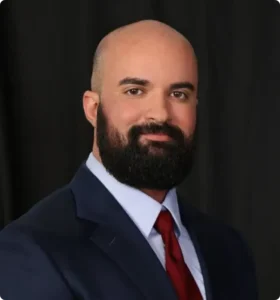
Zachary Gold, Esq. owns Cruz Gold & Associates and is the attorney you speak with at your first consultation. He has more than seven years of legal experience and started his career as a paralegal.
He is a Rutgers University alumnus, earned his law degree at Drexel University, and is a member of the American Immigration Lawyers Association. His mother, Marta Cruz Gold, founded the firm in 1995, and his interest in immigration law comes from his own parents' move to the United States. Read more about Zachary and the firm.
Questions couples ask before they file
Do I need a lawyer for a marriage-based green card?
Not always: couples with simple histories often file on their own. A lawyer matters most when your spouse entered without a visa or overstayed, either of you was married before or has an arrest, your spouse was ever in immigration court, or your evidence of a shared life is thin. A petition filed without the required initial evidence can now be denied without a request for more evidence, and a denial can go further: under Policy Manual guidance in force since August 2025, USCIS may issue a Notice to Appear to a beneficiary it finds removable (USCIS Policy Manual).
How soon after the wedding can we apply?
As soon as you have the marriage certificate issued by the civil authority (USCIS Policy Manual). Filing early in the marriage has one consequence: if the marriage is under two years old when the green card is granted, the card is the two-year conditional one.
What if my spouse married soon after arriving on a visitor visa?
USCIS does not apply the State Department's 90-day rule, under which a consular officer may presume that a visitor who marries and settles here within 90 days of the visa application or entry misrepresented their plans (9 FAM 302.9); USCIS said in 2019 that the rule does not apply to it and removed it from its manual in 2021 (Policy Manual updates). USCIS can still weigh conduct that contradicts what your spouse told officers, especially soon after entry, and it sets no fixed number of days (USCIS Policy Manual). Zachary asks what your spouse planned and said at entry at the first consultation.
Can my spouse travel while the green card application is pending?
Generally only with an advance parole document, and only after advice if your spouse ever overstayed. Leaving without one usually ends the application, and a trip on advance parole can now trigger the unlawful presence bars. A green card applicant returning on advance parole does not pay the $1,050 parole fee charged at the border to many other parolees (USCIS fee schedule).
What happens if we separate or divorce before the green card?
A final divorce before the green card is granted ends the case: an approved petition is revoked automatically (8 CFR 205.1). A legal separation also leads to a denial. Living apart without one does not by itself, though USCIS looks at how long, and whether you still support each other (USCIS Policy Manual). After a conditional green card, the route is a waiver on Form I-751 (after a divorce or abuse); before it, an abused spouse can self-petition under VAWA.
More on green cards and family cases
Take the First Step Towards Peace of Mind
We’re here to help you navigate your legal journey with confidence and care. Pick a time below for a free 20-minute consultation with attorney Zachary Gold.

Reach Out for Trusted Support

CONTACT US
Phone: (609) 924-8500
Email: [email protected]
830 Bear Tavern Rd Ste 108, Ewing Township, NJ 08628, United States
© 2026 All Rights Reserved | Cruz Gold & Associates | Privacy Policy