EB-2 NIW Lawyer
Petition for Your Own Green Card Through the National Interest Waiver
Researchers, physicians, engineers and founders whose work serves the country can file for an EB-2 green card without an employer; book a free consultation to have your record reviewed.
- 5.0 108 Google reviews, Ewing office
 AILA memberAmerican Immigration Lawyers Association
- Since 1995Family firm founded by Marta Cruz Gold
- ¡Hablamos español!We work in English and Spanish
How can we help?
Pick a time below for a free 20-minute consultation with attorney Zachary Gold.
EB-2 without a job offer
The national interest waiver lets a professional with an advanced degree, or a person of exceptional ability, file for an EB-2 green card without a job offer and without the labor market test called PERM. At Cruz Gold & Associates, attorney Zachary Gold is the EB-2 NIW lawyer who reviews your record, tells you whether the waiver fits, and prepares the petition if it does.
USCIS may grant the waiver when you show that waiving the job offer is in the national interest, and you file Form I-140 for yourself (USCIS). We file NIW petitions for clients in every state and for professionals still living abroad, and the firm's offices are in Ewing, Hackensack, Philadelphia and Houston.
Who comes to us for a national interest waiver
- Researchers and academics with publications, citations, grants or results that others build on. USCIS treats an advanced STEM degree, especially a Ph.D., tied to work on a critical and emerging technology such as certain areas of artificial intelligence or quantum information science as an especially positive factor (USCIS Policy Manual).
- Physicians who will work full time in an area short of doctors or at a VA facility, a group with its own statute and its own five-year service rule.
- Engineers and software developers on an H-1B, many of them born in India or China, who want a green card case that no employer controls. USCIS says adapting an employer's software for its clients does not by itself show national importance, so the endeavor has to reach further (USCIS Policy Manual).
- Founders and entrepreneurs who run a U.S. company. Ownership alone rarely qualifies; USCIS weighs outside investment sized to the plan, accelerator admission, grants, intellectual property, revenue and U.S. hiring (USCIS Policy Manual).
- Students and recent graduates finishing a master's or Ph.D. on an F-1 visa or STEM OPT, whose student status requires them to plan when the petition goes in.
- Professionals living abroad, who file the same petition and finish the case at a U.S. consulate.
Some records fit another route better: EB-1 for extraordinary ability at the very top of a field, an employer-sponsored EB-2 or EB-3 case through PERM labor certification, or a temporary O-1 visa while the record grows.
The two questions USCIS decides
USCIS reviews an NIW petition in a fixed order, and if you do not qualify for EB-2, it can deny the petition without reaching the second question (USCIS Policy Manual).
- Do you qualify for EB-2? Either an advanced degree (a master's or higher, or a bachelor's followed by five years of progressive experience in the specialty) or exceptional ability, shown by at least three of six kinds of evidence. Since January 2025 USCIS also asks whether the occupation you will work in is a profession, whether the five years of experience are in the specialty, and whether exceptional ability relates directly to the endeavor; its own example is a Ph.D. engineer who proposes to open a bakery.
- Does waiving the job offer serve the national interest? Matter of Dhanasar sets three prongs: the endeavor has substantial merit and national importance, you are well positioned to advance it, and on balance the country benefits from waiving the job offer and labor certification (Matter of Dhanasar).
Both questions turn on the proposed endeavor: the specific work you will do in the United States, described more narrowly than a job title. In Dhanasar the occupation was engineer and the endeavor was research on air and space propulsion. USCIS lists what does not show national importance by itself: classroom teaching without broader impact, working in a shortage occupation, general claims that entrepreneurs create jobs, and work that mainly benefits one employer, however large (USCIS Policy Manual). For the evidence that usually answers each prong, see our EB-2 NIW requirements guide. USCIS has not changed the guidance on either question in 2026; its last broad update came in January 2025, and a planned DHS rule on immigrant worker petitions that would have addressed NIW evidence was withdrawn in November 2025 (Federal Register).
What Zachary adds to a self-petition
- A comparison with the employer route. Before you commit to an NIW, Zachary checks whether your employer would sponsor you through PERM. In USCIS's October figures 80% of employer-sponsored EB-2 petitions were decided within 3 months of filing, a stage that comes after the labor certification, and 80% of NIW petitions within 30 months. Both wait in the same EB-2 visa line.
- Premium processing only when it buys time. For applicants born in India, the November 2026 bulletin approves EB-2 cases with priority dates before November 2013, so a petition USCIS acts on within 45 business days still waits years for a visa date. For an H-1B worker an early approval can still bring three-year extensions and the H-4 spouse's work permit, and Zachary tells you when the $2,965 fee buys nothing.
- An index that ties every exhibit to a prong. The officer sees which document proves EB-2 eligibility and which one answers each of the three Dhanasar prongs.
The reviews below come from clients of our Ewing office, are quoted as posted on Google, and do not describe NIW cases.
★★★★★“If you’re debating whether to spend the money on professional help or try to do it yourself, just stop and schedule an introductory call with Zach. You’ll quickly understand why it’s worth it.”
Greg Snow, Google review, 2026
★★★★★“He’s attentive, responsive, and has an incredible attention to detail.”
Lissette, Google review, 2025
★★★★★“He is knowledgeable, honest, and truly invested in his clients.”
Karolina Kozdra, Google review, 2026
Building the endeavor statement and the evidence
Work starts with the endeavor statement, because every other document has to prove something it says. Zachary asks what you will do in the United States over the next few years, who uses the results, and how anyone will see that it worked: the projects, the funding or customers already in place, the people outside your workplace who rely on your work. A statement that reads like a job description, such as "senior data engineer at a fintech company", is rewritten until it names the work and its reach beyond one employer.
The evidence follows the same order as the review. Proof of EB-2 eligibility comes first: the degree and employer letters, or the exceptional ability criteria. For the first Dhanasar prong, the record shows who needs the work and at what scale. For the second, publications, citations, patents, grants, contracts and press coverage show that you can carry it out. For the third, the petition explains why the labor market test should be set aside, for example because you are self-employed, because your skills are rare, or because the work is urgent. Letters carry the most risk: USCIS gives weight to letters from people with first-hand knowledge who describe specific achievements and are backed by independent evidence (USCIS Policy Manual). We ask each writer what they can state from their own knowledge, and we attach the records that support it.
Before filing, Zachary looks for the weak points USCIS names in its own guidance: an endeavor that mostly benefits one employer, a business plan with no investment, customers or revenue behind it, five years of experience that came before the degree or in another field, exceptional ability unrelated to the endeavor, and claims of economic impact or job creation with nothing to measure them. It helps to bring as much of the following to the first meeting as you have:
- your CV and a few lines on the work you plan to do in the United States
- degrees, transcripts and any credential evaluation for degrees earned abroad
- employer letters or records with your dates, duties and growing responsibility
- publications with citation counts, patents, grants, awards and press coverage
- for founders: company records, investment, contracts, revenue and payroll
- your passport, visa, I-94 record and any USCIS approval notices
- names of people outside your workplace who know your work
How many NIW petitions does USCIS approve?
About half of the NIW petitions USCIS decided in the latest data were approved, by our count; USCIS publishes the counts and no rate.
- October 2024 to September 202519,532 approved, 15,863 denied (USCIS data)
- October 2025 to June 20269,238 approved, 9,585 denied (USCIS data)
- Waiting for a decision96,297 on June 30, 2026, up from 74,392 on September 30, 2025
- Employer-sponsored EB-2 petitions, October 2025 to June 202638,835 approved, 1,258 denied
These count petitions, and a denial in one quarter can concern a petition filed long before. Between April and June 2026 USCIS received 363 NIW petitions from beneficiaries in New Jersey, 301 from Pennsylvania and 1,274 from Texas (USCIS data).
Government fees for a self-petition
For one person filing on paper, the petition costs $1,015: the $715 Form I-140 fee and the $300 Asylum Program Fee that self-petitioners pay (USCIS fee schedule). Premium processing rose to $2,965 on March 1, 2026, and none of the other USCIS form fees below has changed this year (USCIS fee schedule).
- Form I-140 petition$715 on paper, $665 online
- Asylum Program Fee$300 for a self-petitioner
- Premium processing (Form I-907), optional$2,965
- Green card application (Form I-485)$1,440 on paper, $1,390 online; $950 for a child under 14 filing with a parent
- Work permit with the green card application (Form I-765)$260
- Travel permit (advance parole, Form I-131)$630 on paper, $580 online
- Medical exam (Form I-693)no USCIS fee; the civil surgeon sets the price
- Immigrant visa abroad$345 to the State Department per person, then the $235 USCIS Immigrant Fee
- Appeal or motion (Form I-290B), if needed$800
A petition filed together with a premium processing request goes by mail and pays the paper fee; a petition filed online can be upgraded later with a premium request uploaded to the online account (USCIS). Your spouse and each child pay their own green card application fees (State Department fees; USCIS fee schedule).
EB-2 NIW processing time and the visa bulletin wait
Two waits follow the filing: USCIS's decision on the petition, then your turn in the EB-2 line. In the USCIS figures updated October 19, 2026, 80% of NIW petitions were decided within 30 months (USCIS processing times). Premium processing gives USCIS 45 business days to act on an NIW, against 15 for most other categories. A request for evidence stops that clock, and a new 45 days start when your answer arrives. It does not speed up the green card application or your visa date (USCIS).
Your priority date is the day USCIS receives the complete petition (8 CFR 204.5(d)). The November 2026 Visa Bulletin gives these EB-2 dates (State Department):
- Born in most countries, Mexico or the Philippinesapproval with a priority date before April 1, 2025; filing before March 15, 2026
- Born in mainland Chinaapproval before October 1, 2021; filing before January 1, 2023
- Born in Indiaapproval before November 1, 2013; filing before January 15, 2015
In November USCIS accepts employment-based green card applications under the filing dates, while approval still waits for the final action date (USCIS). A petition filed this month gets a November 2026 priority date, later than every filing date above, so the green card application follows when the bulletin reaches your date. The December 2026 bulletin had not been published on November 10. India used up its EB-2 numbers for fiscal year 2026 in May, and the count started again on October 1, 2026 (State Department).
If you already hold an approved EB-1, EB-2 or EB-3 petition, the NIW keeps that earlier priority date, which matters most for applicants born in India and China (8 CFR 204.5(e)). Once filed, 80% of employment-based green card applications were decided within 9.5 months at USCIS field offices in the October figures, a single figure USCIS publishes for all of them (USCIS processing times).
From approved petition to green card
Inside the United States you file Form I-485 when your date allows it, with the medical exam, and usually with requests for a work permit and a travel permit. A self-petitioner can file the I-140 and I-485 together online when the date is already current (USCIS). An NIW normally needs no affidavit of support, because no relative filed the petition (8 CFR 213a.2), but EB-2 applicants are subject to the public charge test, under rules that apply to applications filed from September 18, 2026 (USCIS).
Every applicant is interviewed unless USCIS waives it (USCIS Policy Manual). The interview takes place at the field office for your address: Mount Laurel for the area around our Ewing office, Newark for our Hackensack office, and the field offices in Philadelphia and Houston (USCIS field office data). Zachary can attend it with you.
From abroad, the approved petition goes to the National Visa Center, you file Form DS-260 and pay $345, and the interview takes place at the consulate where you live, or in your country of nationality if you ask (State Department; State Department). Proclamation 10998 suspends immigrant visas, employment-based ones included, for nationals of 39 countries, among them Iran, Nigeria and Venezuela, with no exception for employment cases. By its terms it limits visas and entry and does not stop a green card application filed inside the United States (State Department). USCIS holds on applications from nationals of the restricted countries were set aside by one federal court in June 2026 and blocked by another in August, and USCIS says it follows those orders (USCIS).
Keeping your status while the petition waits
An H-1B worker can extend past the six-year limit in one-year steps once 365 days have passed since the I-140 was filed, or in steps of up to three years with an approved petition when the per-country limit holds back the visa, as it does for India and China (8 CFR 214.2(h)(13)(iii)). The rule covers EB-2 petitions in general, and an NIW is one, although we have found no USCIS guidance that addresses NIW petitions by name. Once the I-140 is approved, the H-4 spouse can apply for a work permit (USCIS).
Someone in H-1B, L-1, O-1, E-3 or H-1B1 status with an approved NIW and a distant visa date can ask for a one-year work permit based on compelling circumstances, such as serious illness or a dispute with the employer. Working on that permit ends the temporary status, so it is a last resort (USCIS).
F-1 students and graduates on OPT hold a status that requires the intent to leave after the studies, and the State Department applies that test at every student visa application (9 FAM 402.5-5(E)). We have found no USCIS or State Department guidance on students with a pending NIW, so we time the filing around planned travel and visa renewals.
Changing employers needs no new petition, because the NIW is not tied to a job offer, and once your green card application has been pending 180 days the job portability rules cover you without a separate supplement (USCIS Policy Manual). We have found no USCIS guidance on a change in the work itself, so ask before you switch fields. Work permit renewals filed since October 30, 2025 no longer extend the old card automatically, so file each renewal early (Federal Register). Short gaps do not always block the green card: employment-based applicants can still adjust if, since their last lawful entry, they spent no more than 180 days in total out of status or working without permission (INA 245(k)).
Physician national interest waivers
A physician who agrees to work full time in an area HHS designates as short of health professionals, or at a VA facility, is entitled to the waiver when a federal agency or the state health department has found that work to be in the public interest (INA 203(b)(2)(B)(ii); 8 CFR 204.12). Full time means 40 hours a week of clinical practice. Primary care doctors and doctors in other specialties can qualify; dentists, chiropractors, podiatrists and optometrists cannot.
The petition includes the employment contract or VA commitment, proof that the work is in the shortage area or VA facility, the public-interest letter, and proof of the licensing exams and English, such as ECFMG certification. For a job not yet started, the contract and the letter must be dated within six months before filing.
The green card waits until five years of full-time service in total are done, not counting time in J-1 status. Meanwhile you can hold a work permit and a travel permit, and you send USCIS evidence of your work after the second anniversary of the approval and again at the end. The regulation still mentions a six-year window for the five years, but USCIS follows a 2006 court decision that struck it and sets no time limit, as long as the interim and final evidence arrives on time (USCIS Policy Manual). A move to another shortage area, or into your own practice, needs a new petition, which keeps the original priority date. The general job portability rules do not apply, and the waiver does not satisfy a J-1 two-year home residence requirement.
Bringing your spouse and children into the case
The petition covers your spouse and your unmarried children under 21 as derivatives, on your priority date, whether they adjust with you here or follow you through a consulate. Every family member files a separate application with a separate fee (INA 203(d); USCIS). For a child near 21, the Child Status Protection Act deducts the months your petition was pending, and for applications filed since August 15, 2025 USCIS counts from the final action date, so filing early under the filing chart does not freeze the child's age (USCIS Policy Manual). With a green card application pending, your spouse can apply for a work permit for $260; in the October figures 80% were decided within about 12 months (USCIS processing times).
RFEs, denials and the limits of court review
Since August 5, 2026 USCIS may deny a petition without first asking for missing evidence when required initial evidence is missing or the filing does not show eligibility (USCIS). An NIW therefore goes in complete, with EB-2 eligibility and all three prongs argued. If USCIS does ask, a request for evidence allows at most 12 weeks with no extension, and a notice of intent to deny at most 30 days (USCIS Policy Manual).
After a denial you can appeal to the Administrative Appeals Office or ask the office that decided to reopen or reconsider, on Form I-290B within 30 days, or 33 if the decision came by mail, for $800 (USCIS). Between July and September 2026 the AAO decided 141 NIW appeals and motions, 99.3% of them within its 180-day target (USCIS). You can also file a new petition with a stronger record at any time. A denied petition sets no priority date, but a date from an earlier approved EB-1, EB-2 or EB-3 petition is kept (8 CFR 204.5(e)).
Federal courts have held that the waiver decision itself cannot be reviewed. The Fifth Circuit, which covers Texas, and the Ninth Circuit have said so, and the Fifth Circuit reports that the Third Circuit, which covers New Jersey and Pennsylvania, reached the same result in an unpublished decision (Flores v. Garland; Poursina v. USCIS). That leaves the appeal, the motion and a new petition as the realistic options.
The Gold Card and the 2026 visa pauses
The Gold Card program treats a $1 million gift to the Commerce Department as evidence for EB-1A, for exceptional ability in business under EB-2 or for the national interest waiver. It is filed on Form I-140G, online and only by invitation, with a $15,000 fee for each person, and no statute or regulation has changed the ordinary NIW test because of it (Executive Order 14351; USCIS). The State Department's pause on immigrant visas for nationals of 75 countries, which included Brazil, Colombia, Pakistan and Russia, has not been in effect since August 21, 2026 under a court order, while nationals of the 39 countries named in Proclamation 10998 remain covered by the proclamation (State Department).
National interest waiver cases we handle
- NIW petitions for researchers, scientists and academics
- Engineers and technology professionals, including H-1B workers from India and China
- Founders and self-employed professionals
- Physician national interest waivers
- Choosing between the NIW, EB-1 and an employer-sponsored PERM case
- Premium processing requests
- Responses to requests for evidence and notices of intent to deny
- Appeals, motions and new petitions after a denial
- Green card applications for you, your spouse and children, here or at a consulate
- Work and travel permits while the green card application is pending
What Zachary charges for an NIW
Zachary charges a flat fee for the petition and a separate flat fee for the green card stage when your date comes up, and he quotes both before any work starts. Government fees come on top, the firm accepts credit cards, and how we charge in other kinds of cases is on our page about what an immigration lawyer costs.
Talk to attorney Zachary Gold about your case. The first consultation is free, and you hear the fee before any work begins.
Laws, fees, processing times and USCIS data on this page were checked between November 4 and November 10, 2026 on uscis.gov and the USCIS Policy Manual, the State Department's sites and Foreign Affairs Manual, federal statutes and regulations, the Federal Register and federal court decisions; the field office for each of our offices was checked on October 3, 2026.
The attorney who prepares your NIW petition
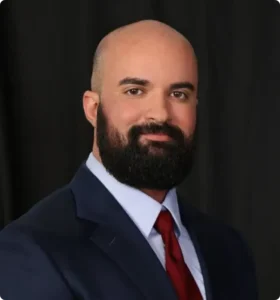
Zachary Gold, Esq. owns Cruz Gold & Associates and is the attorney you speak with at your first consultation. He has more than seven years of legal experience and started his career as a paralegal.
He is a Rutgers University alumnus, earned his law degree at Drexel University, and is a member of the American Immigration Lawyers Association. His mother, Marta Cruz Gold, founded the firm in 1995, and his interest in immigration law comes from his own parents' move to the United States. Read more about Zachary and the firm.
Questions about hiring an EB-2 NIW lawyer
How much does an EB-2 NIW lawyer cost?
Zachary quotes a flat fee for the petition at the free consultation, and a second flat fee for the green card stage, which can come years later for applicants born in India or China. USCIS fees come on top: $1,015 for a paper I-140 with the Asylum Program Fee, $2,965 more if you choose premium processing, and $1,440 for each green card application by someone 14 or older.
Do I need a lawyer for an EB-2 NIW?
No. USCIS accepts NIW petitions filed without a lawyer. Across all NIW petitions, with or without a lawyer, slightly more than half of those USCIS decided between October 2025 and June 2026 were denied. A lawyer helps most in defining the endeavor, choosing the EB-2 basis and checking that every letter and exhibit answers one of the three prongs.
Can I file an EB-2 NIW while on an H-1B?
Yes. The H-1B allows immigrant intent, so filing does not count against your status or your next visa stamp (INA 214(h)). Once 365 days have passed since the petition was filed, it can support H-1B extensions past six years; an approved one can support three-year extensions while the per-country limit holds you back, and your H-4 spouse can apply for a work permit once the petition is approved.
Can I file an EB-2 NIW on F-1 or OPT?
Yes, no rule forbids it, but the student visa requires an intent to leave after your studies, and a consular officer checks that at every student visa application. We have found no USCIS or State Department guidance on students with a pending NIW, so we plan the filing around your travel, visa renewals and the next status you will hold.
Can I change jobs after my EB-2 NIW is approved?
Yes. The waiver is not tied to an employer, so a new job needs no new petition. If the new job means different work from the endeavor in your petition, talk to us first, because we have found no USCIS guidance on that case. Physician waivers follow stricter rules: a move to another shortage area needs a new petition.
What happens if my EB-2 NIW is denied?
You can appeal or ask USCIS to reopen or reconsider within 30 days, or file a new petition with a stronger record at any time. Federal courts generally will not review the waiver decision, so the next filing has to answer the reasons in the denial.
Related pages
Take the First Step Towards Peace of Mind
We’re here to help you navigate your legal journey with confidence and care. Pick a time below for a free 20-minute consultation with attorney Zachary Gold.

Reach Out for Trusted Support

CONTACT US
Phone: (609) 924-8500
Email: [email protected]
830 Bear Tavern Rd Ste 108, Ewing Township, NJ 08628, United States
© 2026 All Rights Reserved | Cruz Gold & Associates | Privacy Policy