EB-5 Visa Lawyer
EB-5 Green Cards for Investors and Their Families
Talk through the investment, the source of your funds and your family's timeline in a free consultation with attorney Zachary Gold.
- 5.0 102 Google reviews, Ewing office
 AILA memberAmerican Immigration Lawyers Association
- Since 1995Family firm founded by Marta Cruz Gold
- ¡Hablamos español!We work in English and Spanish
How can we help?
Pick a time below for a free 20-minute consultation with attorney Zachary Gold.
What an EB-5 lawyer does
EB-5 is the green card for investors: you invest a set amount in a new U.S. business that creates or preserves at least 10 permanent full-time jobs, and you, your spouse and your unmarried children under 21 become permanent residents, first on a two-year conditional basis (USCIS). Attorney Zachary Gold's work as your EB-5 lawyer covers the immigration side: checking the project against the EB-5 rules, building the record of where your money came from, and preparing the investor petition, the green card application and, near the end of the two-year conditional green card, the petition to remove the conditions.
Whether a particular project is a sound investment is a question for your financial and securities advisers, and we say so at the first meeting.
How much do you have to invest?
For petitions filed since March 15, 2022, the minimum is $1,050,000, or $800,000 in a targeted employment area or an infrastructure project (INA 203(b)(5)(C)). Older official pages still show $500,000, $900,000, $1,000,000 or $1.8 million; those figures belong to earlier rules. The lower $800,000 amount applies in three kinds of places:
- Rural area. Outside a metropolitan statistical area and outside any city or town of 20,000 people or more.
- High unemployment area. The census tract or tracts where the business operates, with unemployment of at least 150% of the national average. Since 2022 only DHS makes this designation, in the regional center's project application or in a direct investor's petition, for two years at a time (USCIS EB-5 questions and answers).
- Infrastructure project. A public works project run by a government agency that takes EB-5 financing.
The law adjusts both amounts for inflation for petitions filed on or after January 1, 2027, with the reduced amount set at 75% of the standard one, and as of October 23, 2026 DHS has not published the new figures. DHS has also proposed $1,400,000 for parts of metropolitan areas outside targeted employment areas where unemployment is well below the national average; that proposal is not final (Federal Register).
The investment must be at risk, with a chance of loss and a chance of gain. Money given to the business in exchange for a note or other debt, an investment with an assured return, and a right to demand repayment do not count (INA 203(b)(5)(D)). In a regional center project, administrative, management, attorney, finder and syndication fees that reduce the money reaching the project are paid on top of the minimum (USCIS Policy Manual). For petitions filed since March 15, 2022, the money must stay invested for at least two years from the day the full amount is in the business and at risk, which in a regional center project means made available to the business that creates the jobs.
Regional center or direct investment
- Regional center (Form I-526E). You invest, usually with other investors, in a project sponsored by a regional center that USCIS has designated. Up to 90% of your 10 jobs can come from estimates of indirect jobs in the regional economy, and the $800,000 infrastructure amount and the infrastructure visa reserve apply only to regional center investors.
- Direct investment (Form I-526). You invest in your own business or one you choose, and the business itself must employ the 10 workers. Several investors can no longer pool money in one direct investment; USCIS rejects those petitions.
Congress authorized the regional center program through September 30, 2027, and the law protects regional center petitions filed by September 30, 2026 if the program lapses (INA 203(b)(5)(S)). Regional center petitions filed from October 1, 2026 do not have that protection if the program lapses on September 30, 2027. The direct route has no end date in the law.
How the ten jobs are counted
Each investor needs 10 full-time jobs, meaning at least 35 hours a week, for U.S. citizens, permanent residents or other immigrants allowed to work. You, your spouse and your children do not count, and neither do workers on temporary visas such as the H-1B (USCIS). At the start, the business plan has to show the jobs will be needed within two years; at the end, you show they were created.
In a regional center project, at least 10% of the jobs must be direct jobs at the business. Where the jobs come from construction lasting less than two years, indirect jobs can cover only 75% and the direct construction jobs count in proportion to how long they last. An investor in a business that has existed for at least two years and lost at least 20% of its net worth in the 12 or 24 months before the priority date can instead keep the existing jobs at no less than their earlier level for at least two years; DHS has proposed removing that option.
Source of funds and the path of the money
Every dollar of the investment and of the fees must come from a lawful source. The petition must include foreign business registration records, your personal and business tax returns from any country for the past seven years, records of any money judgments and any pending civil, criminal or administrative proceedings against you, and the identity of everyone who transfers money into the United States on your behalf (INA 203(b)(5)(L)).
Gifts and loans can fund an investment when they were given or lent in good faith and not to get around those rules, and then the donor's records, or the lender's unless it is a bank, go in as well. Borrowed cash you invest can count even when your own assets do not secure the loan, which has been USCIS policy since a 2020 appeals court decision; where what you contribute is itself a debt, such as a promissory note, you must be personally and primarily liable for it and your own assets must secure it (USCIS Policy Manual). Beyond the source, the petition documents the path of the money to the business, showing that it was your own.
What we check before you invest
Before you commit, Zachary reads the project's offering documents and business plan, or your own business plan for a direct investment, for the EB-5 points: the investment amount and the area designation it relies on, the job estimates, whether the project application has been filed or approved, and the terms that could keep the money from being at risk. At the same time we start on the history of the money you plan to invest. The consultation is with attorney Zachary Gold, and our team at the Ewing office works in English and Spanish.
Client reviews
Neither review comes from an EB-5 investor; both are quoted as posted on Google.
★★★★★“Whenever I had questions or concerns, his team was responsive, patient, and clear in their communication.”
Karolina Kozdra, Google review, 2026
★★★★★“They were kind, patient, responsive, and always took the time to answer our questions and ease our concerns.”
A Nafisa, Google review, 2026
EB-5 cases we handle
- Regional center investor petitions (Form I-526E)
- Direct investor petitions for your own business (Form I-526)
- Review of offering documents and business plans for the EB-5 requirements
- Responses to requests for evidence and notices of intent to deny
- Source of funds and path of funds files, including gifts and loans
- Green card applications filed with the petition from inside the United States
- Work permits and travel permits while the green card application is pending
- Immigrant visa cases at U.S. consulates abroad
- Spouses and children, including the age rules for children close to 21
- Investors whose regional center was terminated or whose project failed
- Petitions to remove conditions (Form I-829)
What EB-5 costs in government fees
A court order of November 2025 put the EB-5 filing fees back to their pre-2024 amounts, and a new fee rule raises them for filings postmarked on or after November 30, 2026 (Federal Register; USCIS fee schedule).
- Form I-526E, $3,675 plus a $1,000 Integrity Fund fee. For regional center investors. From November 30, 2026: $7,850 plus $1,100.
- Form I-526, $3,675. For direct investors. From November 30, 2026: $7,615.
- Form I-829, $3,750. To remove the conditions. From November 30, 2026: $5,000.
- Green card application in the United States, $1,440 per person on paper or $1,390 online. $950 on paper or $900 online for a child under 14 filing with a parent, plus $260 for a work permit and $630 on paper or $580 online for a travel permit.
- Visa case abroad, $345 per person. The State Department's immigrant visa fee (State Department), plus the $235 USCIS Immigrant Fee after the visa is issued (USCIS).
No EB-5 form has premium processing. Each investor petition and green card application is paid separately; USCIS rejects one combined payment.
How long does EB-5 take?
In USCIS figures updated October 19, 2026, 80% of regional center investor petitions were decided within 35 months, counting only petitions whose project application had already been decided; direct investor petitions took 36.5 months and I-829 petitions 25.5 months (USCIS processing times). A regional center petition is not decided until USCIS decides the project application behind it, and 80% of those took 11.5 months.
The law requires rural petitions to come first. Since March 30, 2026, USCIS has generally assigned petitions in the order filed, rural regional center petitions first, and a regional center petition only after its project application is decided (USCIS EB-5 questions and answers).
Visa availability for investors from China and India
EB-5 receives about 10,000 visas a year, for investors and their families together. 20% are reserved for rural projects, 10% for high unemployment areas and 2% for infrastructure. In the November 2026 Visa Bulletin, all three reserved categories are current for every country (State Department).
- Unreserved, final action dates. Current for all countries except China (December 1, 2016) and India (December 1, 2023).
- Unreserved, dates for filing. China March 1, 2021 and India May 1, 2024; current for all others.
- Which chart for filing in the United States. USCIS says EB-5 applicants file under the dates for filing chart in November 2026, while the final action dates chart still decides when the green card can be approved (USCIS).
Your priority date is the date your completed, signed petition is properly filed. In the November 2026 bulletin, the reserved categories have no cutoff for investors born in China or India, while their unreserved final action dates are December 1, 2016 and December 1, 2023. The dates change every month.
Filing for the green card from inside the United States
If you are in the United States, otherwise eligible to adjust status, and a visa is available to you, you can file the green card application together with the investor petition, while it is pending, or after approval (INA 245(n)). While it is pending you can ask for a work permit and a travel permit. If USCIS denies the project application, the investor petitions tied to it are denied as well, and so are the green card applications filed with them; in a May 2026 case, a federal court refused to pause the denial of one such investor's green card application (court opinion).
From the conditional green card to the permanent one
The conditional green card lasts two years. In the 90 days before it expires you file Form I-829, showing that you invested the required amount, that the jobs were created, or are being created and will be before the third anniversary while the money stays invested, and that you met the other EB-5 rules (INA 216A). Where jobs are still being created, DHS may extend conditional status by one year, and you then file again within 30 days after the third anniversary. For investors whose petitions were filed on or after March 15, 2022, USCIS must also visit the business before approval.
If you do not file, conditional status ends on the second anniversary and USCIS starts removal proceedings; a late filing may be accepted with a written explanation of good cause and extenuating circumstances. The I-829 receipt notice extends your conditional resident status for the period printed on it, and with your green card it shows your status, work authorization and right to return from travel.
Your spouse and children may be included in your I-829, and those who are not file their own. From November 30, 2026, a child who turned 21 or married, or a former spouse, may be included or file separately, and if the investor dies or does not file, family members may file their own within the investor's filing window (Federal Register).
If the regional center or the project fails
When USCIS terminates a regional center or bars a business from the program, an otherwise qualifying investor who acted in good faith keeps a pending petition or conditional residence by responding within 180 days of the notice from DHS, either showing that they still qualify or amending, for example by having the business join another regional center or by investing in another qualifying business. The priority date stays the same, and children are protected from aging out (INA 203(b)(5)(M)). These protections do not cover a project that simply fails without a termination or bar.
Investors applying from abroad
After approval and once your priority date is current, the National Visa Center collects fees and documents and schedules the interview in your country of residence, or in your country of nationality if you ask (State Department). Each applicant needs a medical exam, and the immigrant visa is generally valid for six months.
Since January 1, 2026, Proclamation 10998 suspends immigrant visas, EB-5 included, for nationals of 39 countries, among them Afghanistan, Haiti, Iran, Nigeria, Venezuela and Cuba, and it has no exception for investors. It does not reach people who were in the United States or held a valid visa on that date, permanent residents, or dual nationals traveling on the passport of a country not on the list, and case-by-case national interest exceptions exist (Proclamation 10998). The State Department's separate pause on immigrant visas for 75 countries has not been in effect since August 21, 2026, under a court order (State Department).
Laws, fees, processing times and visa dates on this page were checked on October 23, 2026 on uscis.gov and the USCIS Policy Manual, the State Department's sites and Visa Bulletin, the Federal Register, federal statutes and court records.
From first call to permanent green card
- Free consultation. Tell us the amount, the project or business you have in mind, and where the money comes from.
- Project review and funds file. We read the project documents for the EB-5 requirements and gather the source of funds records.
- Investor petition. Form I-526E or I-526 goes to USCIS, with the green card application if you are in the United States and a visa is available.
- Green card. In the United States, the green card application is decided; abroad, you go through the National Visa Center and the consulate interview.
- I-829. In the 90 days before the second anniversary, we file to remove the conditions for you and your family.
Our fees
We quote a flat fee for each stage before the work begins: the investor petition with its source of funds file, the green card application or visa case, and the I-829. Government fees are separate and listed above, our page on immigration lawyer fees explains how we set ours, and credit cards are accepted.
Talk to attorney Zachary Gold about your case. The first consultation is free, and you hear the fee before any work begins.
Your attorney
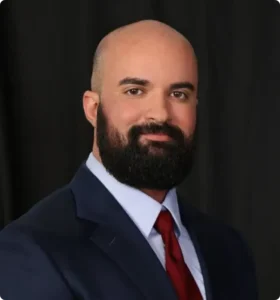
Zachary Gold, Esq. owns Cruz Gold & Associates and is the attorney you speak with at your first consultation. He has more than seven years of legal experience and started his career as a paralegal.
He is a Rutgers University alumnus, earned his law degree at Drexel University, and is a member of the American Immigration Lawyers Association. His mother, Marta Cruz Gold, founded the firm in 1995, and his interest in immigration law comes from his own parents' move to the United States. Read more about Zachary and the firm.
Questions about EB-5
Should I file my EB-5 petition before January 1, 2027?
The investment amounts adjust for inflation for petitions filed on or after January 1, 2027, and the USCIS filing fees rise for filings postmarked on or after November 30, 2026. A regional center petition filed now also lacks the law's protection if the program lapses on September 30, 2027. Whether to file sooner depends on your project and your source of funds file being ready, and we look at that at the consultation.
Is the Gold Card the same as EB-5?
No. The Gold Card comes from a September 2025 executive order: a gift of $1 million to the Commerce Department, or $2 million from a company, is treated as evidence for an EB-1 or EB-2 green card (Executive Order 14351). USCIS has published Form I-140G for it, filed online by invitation with a $15,000 fee per person (USCIS). The Gold Card did not change EB-5, which remains a separate route that requires an investment and jobs.
Can I use a gift or a loan for my EB-5 investment?
Yes, when it was given or lent in good faith and not to get around the source of funds rules; the donor's records, or the lender's unless it is a bank, go into the petition, as the source of funds section explains.
Can my family get green cards through my EB-5 case?
Your spouse and your unmarried children under 21 come with you, or follow later, with the same priority date. For a child close to 21, age is counted under the Child Status Protection Act, and for green card applications filed in the United States on or after August 15, 2025, USCIS fixes that age from the final action dates chart, so a child who filed under the dates for filing chart can still age out (USCIS Policy Manual).
Do I get my investment back?
Not necessarily. For petitions filed since March 2022, the money must be at risk and stay invested for at least two years, so whether and when you are repaid depends on the project's terms and on how the project performs.
Does an EB-5 green card make me a U.S. taxpayer?
Yes. Under the IRS green card test, a lawful permanent resident is a U.S. resident for federal tax purposes; if you did not already meet the substantial presence test that year, residency generally starts on your first day in the United States as a permanent resident (IRS). Plan the tax side with a tax adviser before you immigrate.
Related pages
Take the First Step Towards Peace of Mind
We’re here to help you navigate your legal journey with confidence and care. Pick a time below for a free 20-minute consultation with attorney Zachary Gold.

Reach Out for Trusted Support

CONTACT US
Phone: (609) 924-8500
Email: [email protected]
830 Bear Tavern Rd Ste 108, Ewing Township, NJ 08628, United States
© 2026 All Rights Reserved | Cruz Gold & Associates | Privacy Policy