EB-1 Visa Lawyer
Three EB-1 Routes to a Green Card Without Labor Certification
Bring your CV, your publications or your company chart to a free consultation with attorney Zachary Gold and find out which EB-1 group your record fits.
- 5.0 104 Google reviews, Ewing office
 AILA memberAmerican Immigration Lawyers Association
- Since 1995Family firm founded by Marta Cruz Gold
- ¡Hablamos español!We work in English and Spanish
How can we help?
Pick a time below for a free 20-minute consultation with attorney Zachary Gold.
The EB-1 green card and where we come in
EB-1 is the first of the employment-based green card categories, for people the law calls priority workers (INA 203(b)(1)), and none of its three groups needs a labor certification from the Department of Labor (USCIS). An EB-1 visa lawyer's work is mostly evidence: deciding which documents meet which criterion, getting letters that say something specific, and writing the brief that argues the case to the officer. Attorney Zachary Gold does that work on the Form I-140 petition and stays on the case through the green card.
The category is allotted 28.6% of the employment-based visa numbers each year, plus any the fourth and fifth preferences do not use, out of a total the November 2026 Visa Bulletin puts at no fewer than 140,000 (State Department).
EB-1A, EB-1B or EB-1C: which one fits
- EB-1A, extraordinary ability. For people at the very top of their field in the sciences, arts, education, business or athletics. No employer or job offer is needed: you can file for yourself, or an employer or someone else can file for you.
- EB-1B, outstanding professors and researchers. For academics recognized internationally as outstanding, with at least three years of teaching or research, who have an offer of a permanent research job or a tenured or tenure-track teaching post. The university or employer files.
- EB-1C, multinational managers and executives. For people who spent at least one of the last three years abroad as a manager or executive of a company related to the U.S. employer, coming to work for it in a managerial or executive role. The U.S. company files.
Some clients fit more than one group. A researcher with a permanent university offer may qualify under EB-1B and EB-1A, and a founder who runs both a foreign company and its U.S. subsidiary may fit EB-1C as well as EB-1A, and the petition goes in under the standard the evidence meets most clearly.
The ten EB-1A criteria
USCIS looks for either one major internationally recognized award, such as a Pulitzer, an Oscar or an Olympic medal (USCIS), or evidence that meets at least three of ten criteria (8 CFR 204.5(h)). The USCIS Policy Manual explains how each one is read (Policy Manual):
- Prizes or awards. Lesser national or international awards for excellence in your field. Team awards count when each member receives the award or is named in it; awards from a single employer, school or locality may have little national or international recognition.
- Memberships. In associations that require outstanding achievement, judged by recognized authorities in the field. Past membership counts; membership earned by a degree, years of experience or dues does not.
- Published material about you. Articles in professional or major trade publications or other major media. They must be about you and your work, and paid content is excluded.
- Judging the work of others. For example peer review for journals or conferences, a dissertation committee, or review of government research grants, shown by both the invitation and proof the review was done.
- Original contributions of major significance. Research that is widely cited or put into use, or a patent that was commercialized, can show major significance, and detailed letters help, especially when documents back them up. A patent, grant or publication by itself does not.
- Scholarly articles. Peer-reviewed articles or published papers from recognized conferences, in professional or major publications.
- Artistic exhibitions. Display of your own work at artistic exhibitions or showcases. Trade and science shows count only as comparable evidence.
- A lead or critical role. For an organization, department or division with a distinguished reputation, such as a senior research post, principal investigator on a merit-based grant, or founder of a startup with significant outside funding.
- High salary. Pay that is high compared with others in your field and location, shown by tax returns, pay statements or a job offer against wage data. Foreign pay is compared with local figures.
- Commercial success in the performing arts. Sales or box office receipts compared with others in the field.
If a criterion does not readily apply to your occupation, you may submit other evidence of comparable significance, and the officer considers it, for example presentations at major trade shows in place of scholarly articles for an engineer in industry, or, for a coach, an athlete they trained winning an Olympic medal. The petition has to explain why the criterion does not fit; a general claim is not enough, and nothing substitutes for the one-time major award.
EB-1A needs no job offer, but the petition must show you are coming to continue work in your field, through letters from prospective employers, contracts, or a detailed statement of your plans. There is no age limit, and an early-career applicant can qualify if the acclaim has been sustained.
How USCIS weighs an EB-1A petition
Meeting three criteria gets a petition through the first of two steps. In step one, the officer decides which criteria the evidence objectively meets, and at that stage judging the work of others or writing scholarly articles counts whatever its caliber. In step two, the final merits determination, the officer weighs the whole record to decide whether you have sustained national or international acclaim and are among the small percentage at the very top of your field (USCIS Policy Manual). Both steps use the preponderance standard, meaning more likely than not.
For step two, the Policy Manual lists factors that count in your favor, none of them required:
- articles in highly ranked journals, especially as lead, senior or sole author
- a high citation rate or h-index for your field
- work at top research universities or comparable institutions abroad
- unsolicited invitations to speak at national or international conferences
- being a named investigator on a competitive, peer-reviewed U.S. government grant in science or technology
Letters from others in your field carry weight when they describe your contribution specifically and are backed by documents; letters that repeat the legal standard in general terms rarely persuade, and recognition from people outside your own circle counts for more.
The two-step review comes from a 2010 appeals court decision, Kazarian v. USCIS. In 2026, two judges of the federal court in Nebraska came out differently on the second step. In January, Mukherji v. Miller went against it, as the later ruling describes it, and the government withdrew its appeal (Eighth Circuit docket); in September, Agarwal v. Miller upheld it, as the Fifth Circuit, which covers Texas, did in 2022 (Agarwal v. Miller). USCIS still applies both steps, so we prepare every petition for both.
EB-1B for professors and researchers
An EB-1B case needs international recognition as outstanding in a specific academic field, at least three years of teaching or research in that field, and at least two of six criteria (8 CFR 204.5(i)): major prizes for outstanding achievement, membership in associations that require outstanding achievement, published material by others about your work, judging the work of others, original research contributions to the field, and scholarly books or articles in journals with international circulation. The same two-step review applies, and the final question is whether, taken together, the record shows you are internationally recognized as outstanding (USCIS Policy Manual).
Teaching or research done while earning an advanced degree counts toward the three years only if you earned the degree and either had full responsibility for the classes you taught or your degree research is recognized in the field as outstanding.
The job offer must be a tenured or tenure-track teaching position or a permanent research position at a university, or a permanent research position with a private employer whose department or institute employs at least three full-time researchers and has documented accomplishments. Permanent means of indefinite duration with an expectation that it continues; a grant-funded position renewed each year can qualify when renewal is reasonably expected, while adjunct posts and fixed-term fellowships do not. Government agencies cannot file EB-1B petitions unless they are themselves a university, and such an agency can file under EB-1A instead if the researcher meets that standard. The employer also shows that it can pay the offered wage from the filing date until you become a permanent resident.
EB-1C for multinational managers and executives
In the three years before the petition, or before you came to the United States to work for the same company group, you must have worked at least one year abroad as a manager or executive for the U.S. employer or its parent, subsidiary or affiliate (8 CFR 204.5(j)). The year need not be continuous, but someone who left the company group for more than two years after coming to the United States generally needs another year abroad (USCIS Policy Manual).
The petitioner must be a U.S. company or other U.S. legal entity that has been doing business for at least one year, and both it and a related company abroad must keep doing business until you receive the green card. EB-1C has no new office route, so a U.S. company that exists on paper but has not done business for a year cannot file, and a foreign company's U.S. branch that is not a separate legal entity cannot file either.
- Manager. Primarily manages the organization or a department, function or component; either supervises other managers or professionals, with authority to hire and fire or recommend it, or manages an essential function at a senior level; and has discretion over daily operations.
- Executive. Directs the management of the organization or a major part of it, sets its goals and policies, and works under only general supervision from higher executives, the board or the owners.
USCIS reads the duties with the share of time spent on each, the organization chart, and whether there are enough employees or contractors to run daily operations. A one-person office will find it very hard to qualify, whatever the title.
Already in the United States on an O-1, L-1 or H-1B?
An O-1 approval is relevant to an EB-1A petition, and USCIS still decides the petition on its own record; for artists the gap is wider, since the O-1B standard of distinction is lower than EB-1A's very top of the field (USCIS Policy Manual). The same goes for an L-1A approval and an EB-1C petition, and an L-1B for specialized knowledge leads to EB-1C only where the work abroad and here is managerial or executive. For O-1, L-1 and H-1B holders, filing for a green card does not by itself count against the visa or status, because these classifications allow immigrant intent (INA 214(h); 8 CFR 214.2(o)(13)).
What happens after you book
- Free consultation. Send your CV and a list of awards, publications, press, memberships and judging work, or for EB-1C the company structure, and Zachary goes through it with you: which criteria are already covered and which need more work.
- Evidence plan. We match each document to a criterion, ask for what is missing, and help the people writing your recommendation letters cover the points USCIS looks for.
- The petition. A legal brief that walks the officer through the criteria and the final merits question, with the exhibits, filed on Form I-140 with premium processing if you choose it.
- Green card application. Filed with the petition if a visa is available and you are in the United States, or later; abroad, through the National Visa Center and the consulate.
- Interview. We prepare you for the field office interview if USCIS holds one, and Zachary can attend it with you.
In our clients' words
Neither client came to us for an EB-1 case; both reviews are quoted as posted on Google.
★★★★★“He is knowledgeable, honest, and truly invested in his clients.”
Karolina Kozdra, Google review, 2026
★★★★★“We are forever grateful for his professionalism, quick response and follow through during the entire process.”
Lissette, Google review, 2025
What USCIS charges for an EB-1 case
Government fees are the same for all three groups, except for the Asylum Program Fee, which depends on who files (USCIS fee schedule):
- Form I-140, $715 on paper or $665 online. The petition.
- Asylum Program Fee, $600, $300 or $0. Paid with every I-140: $600 for most employers, $300 for an employer with 25 or fewer full-time-equivalent employees in the United States, affiliates included, and for self-petitioners, and nothing for public and nonprofit universities and colleges, nonprofit schools, 501(c)(3) organizations and governmental research organizations.
- Premium processing, $2,965. Optional, on Form I-907; it rose from $2,805 on March 1, 2026.
- Green card application in the United States, $1,440 per person on paper or $1,390 online. $950 on paper or $900 online for a child under 14 filing with a parent (USCIS fee schedule), plus $260 for a work permit (Form I-765 fees) and $630 on paper or $580 online for a travel permit (Form I-131 fees). Supplement J, used in EB-1B and EB-1C cases, has no fee.
- Visa case abroad, $345 per person. The State Department's immigrant visa fee (State Department), plus the $235 USCIS Immigrant Fee after the visa is issued (USCIS).
- Appeal or motion, $800. On Form I-290B.
An EB-1A self-petition therefore starts at $1,015 in USCIS fees on paper, before premium processing and the green card application. The I-140 and the green card application can both be filed online, and a self-petitioner can file them together online (USCIS); a petition filed with premium processing still goes by mail.
EB-1 processing times in November 2026
USCIS's figures of October 19, 2026 put EB-1A at 32.5 months for 80% of petitions, EB-1B at 15 months and EB-1C at 27.5 months (USCIS processing times). With premium processing, USCIS acts within 15 business days on EB-1A and EB-1B petitions and within 45 business days on EB-1C petitions; a request for evidence stops that clock, and a new period starts when your response arrives (USCIS).
The green card application is decided by a USCIS field office, generally after an interview, because USCIS interviews every applicant unless it waives the interview case by case. For employment-based applications USCIS publishes one figure for all field offices, 9.5 months for 80% of cases, and it takes up ready cases in the order received wherever you live. The field office depends on your ZIP code: Ewing (08628) goes to Mount Laurel, Hackensack (07601) to Newark, and the ZIP codes of our Philadelphia and Houston offices (19107 and 77004) to the Philadelphia and Houston field offices.
Visa dates for China and India
When an EB-1 green card can be approved depends on the Visa Bulletin. In the November 2026 bulletin, EB-1 is current on both charts for every country, Mexico and the Philippines included, except two, and dates can move back as well as forward from month to month (State Department):
- China (mainland born)final action date August 1, 2023; date for filing July 1, 2024.
- Indiafinal action date February 1, 2023; date for filing July 1, 2024.
In November 2026 USCIS accepts employment-based green card applications under the dates for filing chart, while the final action date still decides when the green card can be approved (USCIS). Your priority date is the day USCIS receives your complete, signed I-140 with the correct fee. An approved EB-1, EB-2 or EB-3 petition gives its priority date to any later petition for you in those categories, and the earliest date counts unless an approval was revoked for fraud, misrepresentation or error (8 CFR 204.5(e)): an Indian or Chinese applicant with an older approved EB-2 or EB-3 petition who later qualifies for EB-1 keeps that date.
Applying for the green card here or abroad
If you are in the United States and a visa is available to you, the green card application can be filed together with the I-140 or while it is pending; USCIS decides the petition first and then the application (USCIS Policy Manual). EB-1 applicants who were lawfully admitted can adjust despite some status violations, as long as the time out of status, working without permission or otherwise breaking the terms of admission adds up to no more than 180 days since that admission (INA 245(k)). Adjustment is also discretionary: under a May 2026 USCIS memo, failing to keep to the terms of a temporary visa, or to leave when expected, is highly relevant against an applicant who could have immigrated through a consulate; the memo treats applying as consistent with a dual intent status such as H-1B or L-1, though that status alone does not earn approval (PM-602-0199).
While the application is pending you can apply for a work permit and a travel permit. Work permit renewals filed on or after October 30, 2025 no longer extend the old card automatically while they are pending, a rule DHS made final on October 14, 2026, so the renewal should go in early (Federal Register).
In EB-1B and EB-1C cases, Supplement J confirms the job offer when the green card application is filed after the petition; EB-1A applicants never need it. Once the application has been pending 180 days, an EB-1B or EB-1C applicant can move to a new job in the same or a similar occupation and keep the case and the priority date (USCIS Policy Manual). An I-140 approved for 180 days or more also stays approved if the employer later withdraws it, though without the job offer a new petition is needed unless the 180-day job change applies.
If you are abroad, the approved petition goes to the National Visa Center, which collects fees and documents once your priority date is current (State Department), and the interview is scheduled in your country of residence, or your country of nationality if you ask (State Department). Since January 1, 2026, Proclamation 10998 has suspended immigrant visas for nationals of 39 countries, among them Iran, Nigeria, Venezuela and Cuba, with no exception for EB-1 (State Department). People who were in the United States or held a valid visa on January 1 are outside it, as are dual nationals using a passport from a country not on the list, and national interest exceptions are decided case by case.
Your spouse and children
Your spouse and unmarried children under 21 can get green cards with you or follow later, with the same priority date (INA 203(d)); each files a separate application and pays separate fees. Under the Child Status Protection Act, the time the I-140 was pending is subtracted from a child's age on the day a visa becomes available, and the child has a year from that day to apply. For applications filed on or after August 15, 2025, USCIS takes that day from the final action dates chart, which in November 2026 ran 11 months behind the dates for filing chart for China and 17 months for India, so a child who filed under the dates for filing chart can still turn 21 for immigration purposes (USCIS Policy Manual).
If USCIS asks for more or says no
A request for evidence gives you at most 84 days to answer, plus 3 days if it was mailed, and USCIS cannot extend it; a notice of intent to deny gives at most 30 days (USCIS Policy Manual). Since August 5, 2026, USCIS may deny a petition without asking first when required initial evidence is missing, so an EB-1 petition should be complete on the day it is filed (USCIS).
After a denial, which must state specific reasons (8 CFR 103.3), the petitioner can appeal to the Administrative Appeals Office or ask the deciding office to reopen or reconsider, on Form I-290B within 30 days of the decision, or 33 days if it was mailed (USCIS). Most appeal decisions bind only the parties. A denied petition can also be filed again with stronger evidence, though it sets no priority date of its own. In some cases a lawsuit in federal court is also possible.
EB-1 cases we take on
- EB-1A self-petitions for researchers, engineers, founders, artists and athletes
- EB-1A petitions filed for you by an employer
- EB-1B petitions for universities and private research employers
- EB-1C petitions for multinational companies, including L-1A transferees
- A choice between EB-1A, EB-1B and the EB-2 National Interest Waiver
- Premium processing requests
- Responses to requests for evidence and notices of intent to deny
- Appeals, motions and refiled petitions after a denial
- Green card applications filed with the petition or later
- Work and travel permits while the green card application is pending
- Job changes after 180 days for EB-1B and EB-1C applicants
- Immigrant visa cases at U.S. consulates abroad
- Spouses and children, including the age rules for children close to 21
Fees, processing times and visa dates on this page were checked on November 4, 2026, and the laws and policies between October 3 and November 4, 2026, on uscis.gov and the USCIS Policy Manual, the State Department's sites and Visa Bulletin, the Federal Register, federal regulations and statutes, and court records.
How we charge for EB-1 work
The petition and the green card stage are two separate flat fees, each quoted before work on it begins. The government fees listed above come on top, credit cards are accepted, and the page on how we set our fees compares flat and hourly billing.
Talk to attorney Zachary Gold about your case. The first consultation is free, and you hear the fee before any work begins.
The attorney on your EB-1 case
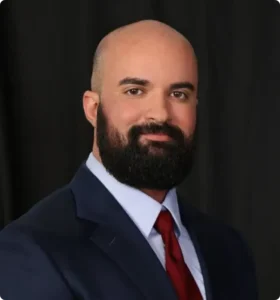
Zachary Gold, Esq. owns Cruz Gold & Associates and is the attorney you speak with at your first consultation. He has more than seven years of legal experience and started his career as a paralegal.
He is a Rutgers University alumnus, earned his law degree at Drexel University, and is a member of the American Immigration Lawyers Association. His mother, Marta Cruz Gold, founded the firm in 1995, and his interest in immigration law comes from his own parents' move to the United States. Read more about Zachary and the firm.
Questions people ask about EB-1
What does an EB-1 case cost in total?
We quote a flat fee after seeing your record and before any work begins; it depends on the group and on how much evidence has to be gathered. Government fees come on top: for an EB-1A self-petition, $1,015 in USCIS fees on paper, $2,965 more if you choose premium processing, and $1,440 per person ($950 for a child under 14 filing with a parent) for a green card application filed on paper in the United States.
How long does EB-1 take from filing to green card?
With premium processing, USCIS acts on the petition, by approving, denying or asking for more evidence, within 15 business days for EB-1A and EB-1B, or 45 for EB-1C; without it, 80% of petitions were decided within 15 to 32.5 months, depending on the group. Green card applications at field offices took 9.5 months for 80% of cases, and filing both together lets the two waits overlap. Applicants born in China or India also wait for their Visa Bulletin date.
Can I file an EB-1A petition myself, without a lawyer?
Yes. EB-1A is the only EB-1 group you can file for yourself, and USCIS does not require a lawyer. What a lawyer adds is the argument: matching each piece of evidence to a criterion, preparing the record for the final merits review, and answering a request for evidence within its deadline. EB-1B and EB-1C petitions must be filed by the U.S. employer.
Can I apply for EB-1A and the EB-2 NIW at the same time?
Yes, as two separate I-140 petitions, each with its own fees, and an approved petition's priority date carries over to a later one. The National Interest Waiver uses a different standard and takes 45 business days with premium processing; in November 2026 its final action dates were April 1, 2025 for most countries, October 1, 2021 for China and November 1, 2013 for India.
Can I apply for EB-1 from outside the United States?
Yes. An EB-1A applicant abroad can self-petition, and an EB-1B or EB-1C employer can file for someone who is abroad. After approval the case goes to the National Visa Center and a consulate interview, generally in your country of residence. Nationals of the 39 countries under Proclamation 10998 who were abroad without a valid visa on January 1, 2026 face an immigrant visa suspension with no EB-1 exception, apart from dual nationals using another passport and case-by-case national interest exceptions.
Can my spouse work while our EB-1 case is pending?
In the United States, your spouse can apply for a work permit once their own green card application has been filed; the fee is $260 when the green card application was filed with a fee on or after April 1, 2024. Abroad, your spouse can work after entering the United States as a permanent resident.
Is the Gold Card an EB-1 green card?
It can lead to one. Executive Order 14351 of September 2025 lets a gift to the Commerce Department, $1 million from a person or $2 million from a company, serve as evidence for EB-1A or EB-2. It is filed on Form I-140G, online and only by invitation, with a $15,000 USCIS fee per person (USCIS). As of August 20, 2026, USCIS had given final approval to 3 such petitions, and a lawsuit challenging the program was awaiting a ruling in federal court in Washington, D.C. in September 2026 (court filing). The ordinary EB-1A petition is a separate route and needs no gift.
Related pages
Take the First Step Towards Peace of Mind
We’re here to help you navigate your legal journey with confidence and care. Pick a time below for a free 20-minute consultation with attorney Zachary Gold.

Reach Out for Trusted Support

CONTACT US
Phone: (609) 924-8500
Email: [email protected]
830 Bear Tavern Rd Ste 108, Ewing Township, NJ 08628, United States
© 2026 All Rights Reserved | Cruz Gold & Associates | Privacy Policy